Agriculture & Land
For a farm, solar is a business decision with three possible shapes: power the holding, export the surplus, or lease land to a developer. The best shape depends on your roofs, your land grade and your local network.
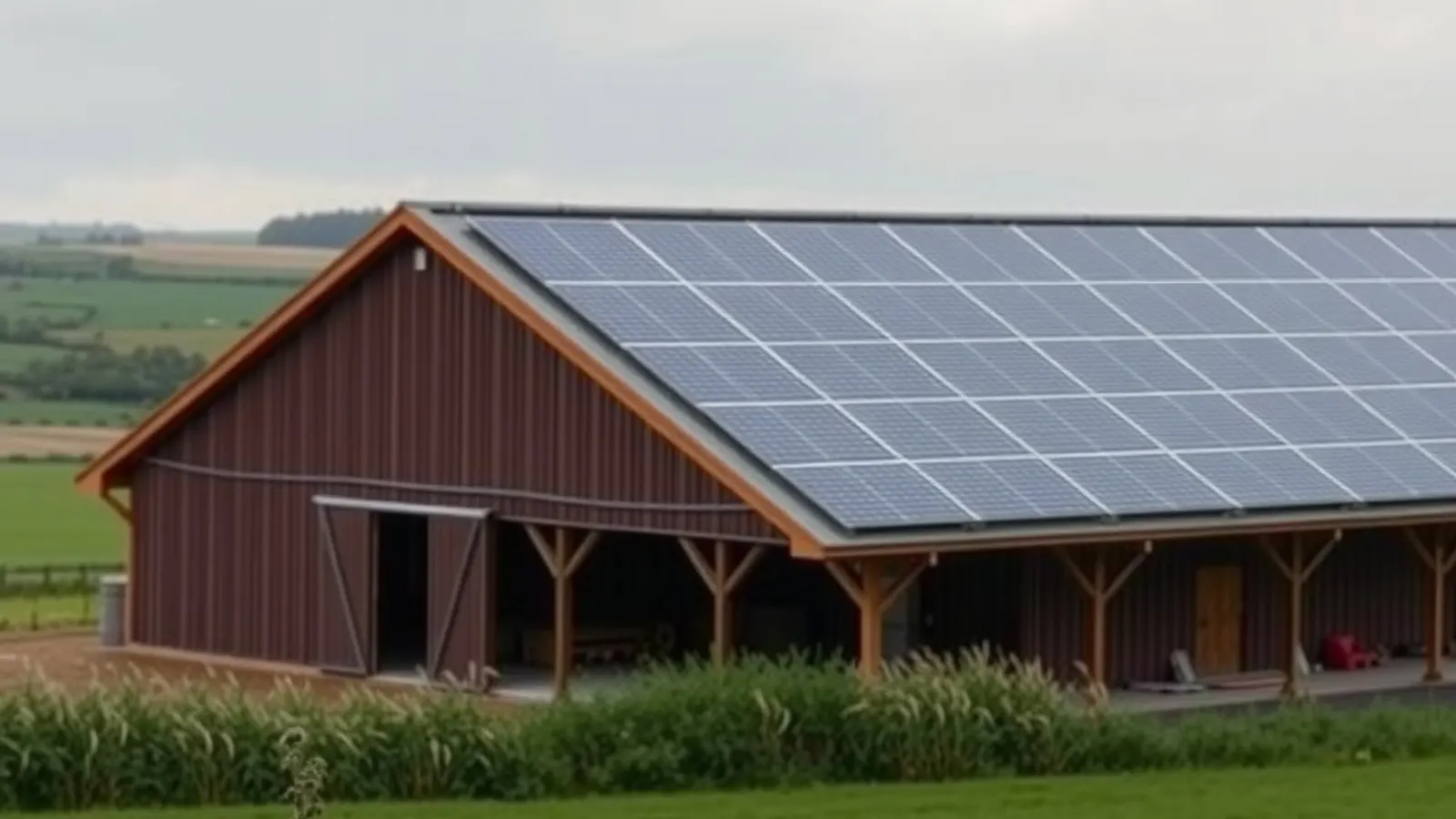
Farm solar comes in three shapes. A barn or shed roof can power the holding and export any surplus. A field can carry a ground-mounted array. Or you can lease land to a developer for a rent. Each answers a different question, and they are not mutually exclusive.
Start with the roofs. Livestock sheds, grain stores and packhouses often have large, simple roofs and a steady load. Dairy units run milking and milk cooling every day. A system sized to that load pays back better than one sized to the biggest roof the structure could hold.
The rural network usually decides what is possible. Anything above the G98 limit needs a G99 application. In the countryside the limit is often the local substation and cable, not the farm. A site a mile from the substation can face reinforcement costs that a closer neighbour avoids. We check the operator's capacity data before you sign a lease or spend money.
For ground-mount schemes, land quality matters. The Agricultural Land Classification grades farmland from 1 to 5, with grade 3 split into 3a and 3b. Grades 1, 2 and 3a count as best and most versatile (BMV) land in England. Planning policy steers large ground-mounted solar towards poorer land, so an ALC survey before you sign an option tells you whether a site is a strong candidate or will face objection.
Scale changes the consent route. In England, solar above 100 MW is decided by the Secretary of State as a nationally significant project. The threshold rose from 50 MW on 31 December 2025. Smaller schemes go to the local planning authority.
Agrivoltaics keeps grazing or cropping going between or beneath panels. The government's 2025 Solar Roadmap says it will explore the opportunities for dual use of land, so policy support may grow. Whether it suits your land depends on panel height, fencing and stock.
Land rent needs care, because offers vary. Industry commonly quotes about £2,500 per hectare a year for large solar leases. Savills, writing in November 2022, put the true margin nearer £2,100 and a net income after costs of £588 per hectare. Treat headline rents as a starting point and model the lease terms, the option period and the grid cost. Our guide to land lease against on-site solar sets out the trade-offs.
Challenges we help with
- Choosing between self-supply, export and a land lease
- Rural network capacity and connection cost
- Land grade, planning policy and dual-use options
How we help
- Compare self-supply, export and lease income as business cases
- Check network capacity before you sign an option
- Weigh barn roofs, ground-mount and agrivoltaic designs
Sources & further reading
- Energy Networks Association — G99 connection guide for Type B–D generation
- Natural England — assessing development on agricultural land
- legislation.gov.uk — Infrastructure Planning (Onshore Wind and Solar Generation) Order 2025
- GOV.UK / DESNZ — UK Solar Roadmap (June 2025)
- Savills — Renting and renewables: solar PV land rents (November 2022)
Related services
Frequently asked questions
Should we use the power ourselves or export it?
Both are possible, and so is a land lease. Because each pays in a different way, we model self-supply, export and lease income side by side so you can compare them as business decisions.
What is agrivoltaics?
It means growing crops or grazing animals on the same land as solar panels. We assess whether it suits your land, your stock and your grid connection.
Insights for agriculture & land
Arable farms and solar: grain drying, irrigation and peak demand
Grain drying and irrigation make arable demand seasonal, while solar peaks in summer. See what solar can serve, an illustrative fan load, and how to size.
Read more →Solar and tenant farmers: who can sign the lease?
A tenant farmer cannot grant a solar lease alone. Tenancy type, landlord consent and surrender decide who signs, while the money needs agreeing too.
Read more →Rural grid connections: why farms wait longest for a G99 offer
Farm solar often waits longest for a grid offer, because rural feeders are long, supplies are often single-phase and substations have little headroom. How to check early.
Read more →Farm or land under review?
Tell us the roofs, the acreage and the nearest substation if you know it. We will say which route to test first.