Commercial & Offices
Offices and retail parks use most of their power in working hours, which suits solar. The harder question is commercial: when the landlord owns the roof and tenants pay the bills, who funds the array and who keeps the saving?
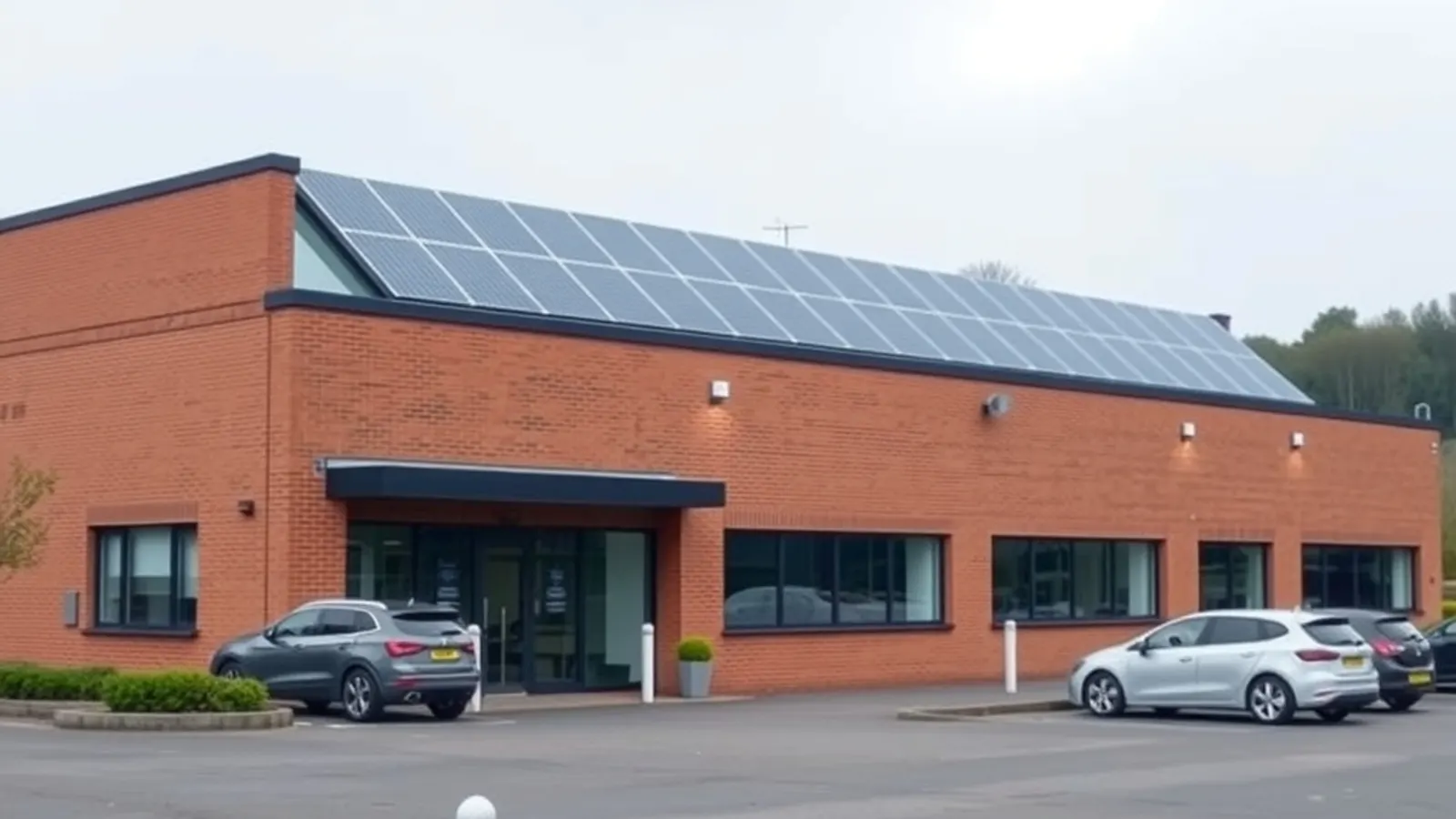
On paper, solar suits an office or a retail park. Demand peaks in working hours, when panels produce, and flat roofs are common. The difficulty is the lease. The landlord owns the roof, tenants hold the meters, and whoever pays for the array may never see the saving.
There are three usual answers. The landlord can fund the array and sell power to tenants under an on-site PPA. The array can feed the landlord's common-parts supply only, which is simple but small. Or a tenant that occupies a whole building can fund it directly, if the lease allows. Each answer needs its own lease clause and its own metering.
Energy-rating rules add pressure on let space. Since 1 April 2023, EPC E has been the minimum for every privately let non-domestic property. Landlords of F and G-rated units must take steps to comply. Solar alone will not rescue a poor building. It can help a rating, so it belongs in the same plan as lighting and heating upgrades.
Roof timing drives cost, because panels fitted to a roof that needs replacing in five years have to be lifted again. Tying the array to a re-roof or a lease break keeps cost and disruption down. Roof warranties often restrict unapproved fixings, so the roofer's written consent is a document to collect early.
One cost worry can be set aside. In England, kit used for on-site renewable power is exempt from business rates from 1 April 2022 to 31 March 2035. Panels should not raise a tenant's rateable value.
Still, not every office is a candidate. A small roof, heavy shading or many floors above the roof produce little against the building's demand. The study can end by saying so.
Challenges we help with
- The landlord owns the roof and the tenant pays the bill
- Roof warranties and lease terms that restrict fixings
- EPC E as the floor for letting, and what lies beyond it
How we help
- Model self-use against each tenant's daytime load and tariff
- Choose between landlord funding, a PPA and tenant funding
- Fit the works around re-roofing and lease breaks
Sources & further reading
Related services
Frequently asked questions
Who benefits if we let the building to tenants?
That depends on the lease and the metering. We model landlord funding, tenant funding and an on-site PPA so that the party paying is the party gaining.
Will solar help our EPC?
On-site generation can improve a non-domestic rating. Whether it lifts yours depends on the building. We test it with your assessor.
Insights for commercial & offices
Solar for retail parks and shopping centres: the EV charging and canopy case
Why retail parks and shopping centres suit commercial solar: daytime load, car-park canopies, EV charging rules, business rates and the landlord and tenant split.
Read more →Solar, EPC ratings and MEES: what commercial landlords need to know
Landlords in England and Wales cannot let property rated F or G. What MEES requires, where solar helps, and why the 2031 EPC B rule is still only a proposal.
Read more →Own or manage offices or retail units?
Describe the building, the lease structure and who holds the meters. We will say which funding route to test first.