Feasibility Studies
A feasibility study tests whether a roof or a field can carry a commercial solar scheme. It ends in a go or no-go, with the reasons written down.
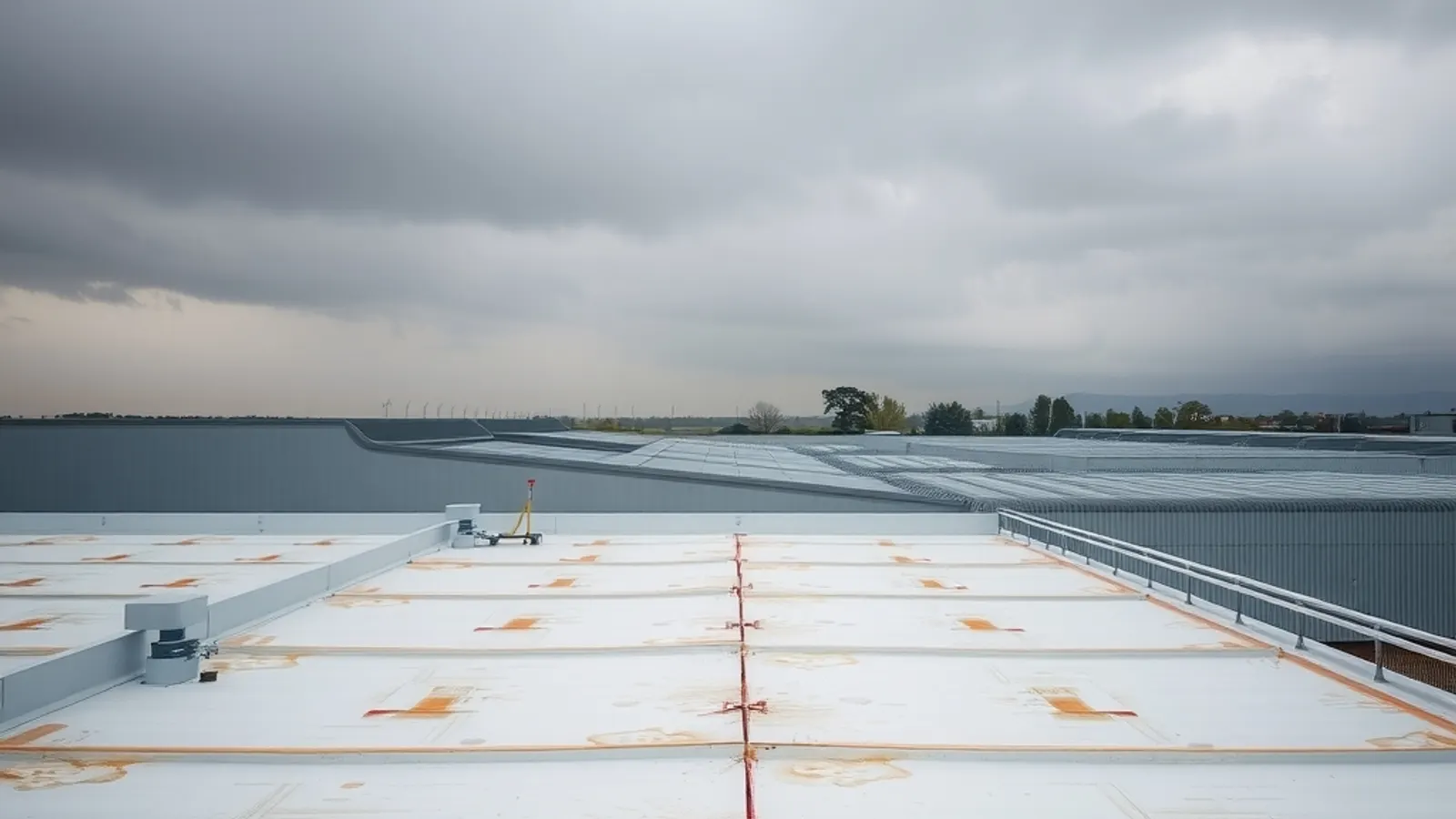
Most commercial solar schemes that fail do so for one of four reasons: the roof, the yield, the grid or the planning position. A feasibility study tests all four while changes are still cheap. Nobody has paid for detailed design yet, and no installer has been asked to price anything.
The roof comes first. A desktop review of aerial images, drawings and any energy certificate narrows the field. Then the structure needs a proper look on site. Rusted purlins, an old membrane or light sheeting can rule out a roof that looks perfect from the air. What the roof can carry, rather than its floor area, usually sets the size of the array.
Yield comes next, and it varies more than people expect. The European Commission's PVGIS tool puts one kilowatt-peak of south-facing panels, tilted at 35 degrees with 14% system losses, at about 1,080 kWh a year in Ipswich, 1,050 in Exeter and 810 in Inverness. Orientation, tilt and shade move those figures again. A flat roof with panels facing east and west gives less energy per kilowatt-peak but holds more panels. A study models your roof, not a national average.
Then the connection. Generators above the small-scale G98 limit of 16 amps per phase need a G99 application to the local network operator. Under G99, a generator below 1 MW is Type A and one from 1 MW up to 10 MW is Type B. The operator may find that the network needs reinforcing, and that cost can land on the project. Ofgem's December 2025 update on its connections review proposed penalties for operators that miss deadlines. It tells you where the delays sit: waiting for an offer is the part of a project you control least.
Consents come last. Many rooftop schemes need little beyond building control sign-off, but a listed building or a conservation area changes that, and a ground-mounted array is a planning application in its own right. The rules differ between England, Scotland and Wales, so we check the one that applies to your site.
Above 50 kWp the MCS installer standard, MIS 3002, no longer applies, because its scope stops at 50 kWp of DC output. So the specification that follows a study must name its own design, testing and commissioning standards.
The study ends with a go or no-go. A no-go is still a useful result. You have paid for a few days of advice instead of a design fee and a tender. A go comes with the capacity, a cost range and the main risks written down, so every installer prices the same brief.
What it delivers
- Roof or land capacity, load limits and shading, from drawings and a site visit
- Yearly output modelled for your roof angle and direction, from satellite sunshine data
- Your network operator, your likely G99 route and any reinforcement risk
- A capital cost range, a self-use estimate and a simple payback
- A go or no-go with the assumptions behind it
Outcomes
- A decision you can put in front of a board
- Roof, grid or planning problems found before design fees are spent
- One brief that every installer prices in the same way
Sources & further reading
Frequently asked questions
How is a feasibility study different from an installer's survey?
An installer's survey exists to win an order, so it tends to end in a quote. A feasibility study is paid for by you and has no system to sell. It is free to say stop.
What data do you need to start?
A year of half-hourly meter data if you have it, the site address and any roof drawings. An address and aerial images are enough for a first pass.
Insights on feasibility studies
12 questions to ask before hiring a commercial solar installer
Twelve questions to ask an installer, for example on insurance, accreditation, roof checks, price, warranties and aftercare, with what a good answer looks like.
Read more →Solar carports and canopies: cost, planning and EV-charging synergy
What drives the cost of a solar car-park canopy, how the Class OA planning route works in England, and how canopies pair with EV charge points and the Workplace Charging Scheme.
Read more →Solar for retail parks and shopping centres: the EV charging and canopy case
Why retail parks and shopping centres suit commercial solar: daytime load, car-park canopies, EV charging rules, business rates and the landlord and tenant split.
Read more →Is your roof worth a study?
Send the site address and say what is driving the project. We will tell you whether a study makes sense, since not every site needs one.