Industrial & Manufacturing
A factory or distribution shed combines a large flat roof with machines that run all day. That is the best case for solar. Whether it works depends on the roof structure, the unit price you pay and the grid connection.
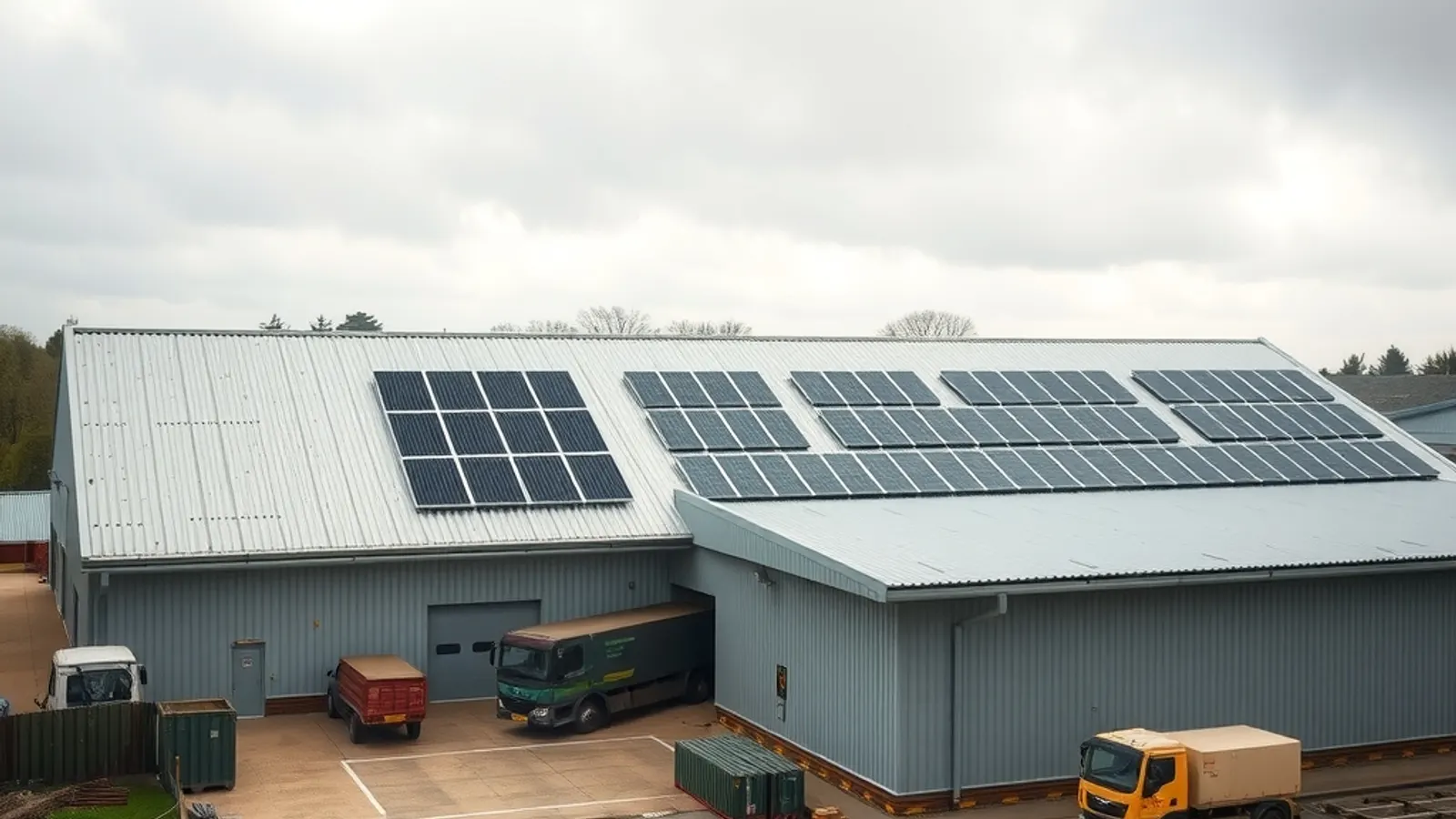
A logistics shed or a factory is the classic solar roof: a big flat area, a steel frame and machinery that runs through the day. Many such sites use most of what an array makes, which is the cheapest way to get value from it.
The price you pay per unit matters as much as the size of the roof. DESNZ's price tables show 2025 average delivered prices of 28.4p per kWh for businesses using 20 to 499 MWh a year, 25.4p for 2,000 to 19,999 MWh and 23.9p for 20,000 to 69,999 MWh, all excluding VAT and the Climate Change Levy. The bigger the user, the lower the unit price, so each kWh of solar saves less. A very large plant needs a bigger array or a higher self-use share to reach the same payback as a smaller site.
The roof sets the limit before the budget does. Older sheds often have light sheeting and ageing purlins that carry less than a modern roof. A structural survey fixes the array size, and sometimes the answer is to re-roof and fit panels in one job.
Size also changes the connection route. Under G99, a generator of 1 MW or more is Type B, not Type A, which brings extra technical requirements and a longer study. For these sites, the network operator's capacity data is a first call. NGED, for instance, publishes a network capacity map.
Tax planning matters for manufacturers. The £1 million Annual Investment Allowance is shared with all other plant. A new production line bought in the same year can use it up. Solar is special-rate spending, so a company gets a 50% first-year allowance above the AIA, not 100% full expensing.
Where the roof is weak, a car park or yard can carry canopies. They cost more per kilowatt-peak than a roof array because they need their own structure, but they can shade vehicles and host charge points.
Challenges we help with
- Roof age, sheeting type and load limits on long spans
- A lower unit price at high consumption, which lengthens payback
- Grid capacity, and the step up to Type B at 1 MW
How we help
- Survey the structure before any commitment is made
- Size the array to the process load, not the roof area
- Compare roof arrays with car-park canopies, including charge points
Sources & further reading
Related services
Frequently asked questions
Our roof is large but old. Is solar still possible?
Possibly. Roof age and sheet type set the load limit, so we survey first. The answer is sometimes a new roof with panels, or a canopy over the car park instead.
We have heavy daytime demand. Does that help?
Yes. The more output you use on site, the better the return, and steady daytime load is the strongest profile. The price you pay per unit sets how much each unit saves.
Insights for industrial & manufacturing
Solar for cold storage and refrigeration facilities
Refrigerated warehouses suit commercial solar because they draw power round the clock. How to size an array, what to check on insulated roofs, and when batteries pay.
Read more →Solar for manufacturing: process heat, compressed air and matching daytime load
Factories should match solar to shift patterns, compressed air and process heat, since power used on site is worth more than power exported. The checks that show the fit.
Read more →Solar for warehouses and logistics: what decides whether a big roof pays
A large warehouse roof is a strong start for solar. Still, three checks decide the outcome: the roof structure and covering, grid capacity, and how much power you use on site.
Read more →Running a factory or distribution site?
Tell us the roof type, the yearly electricity use and the supply voltage. We will say what a study would check first.