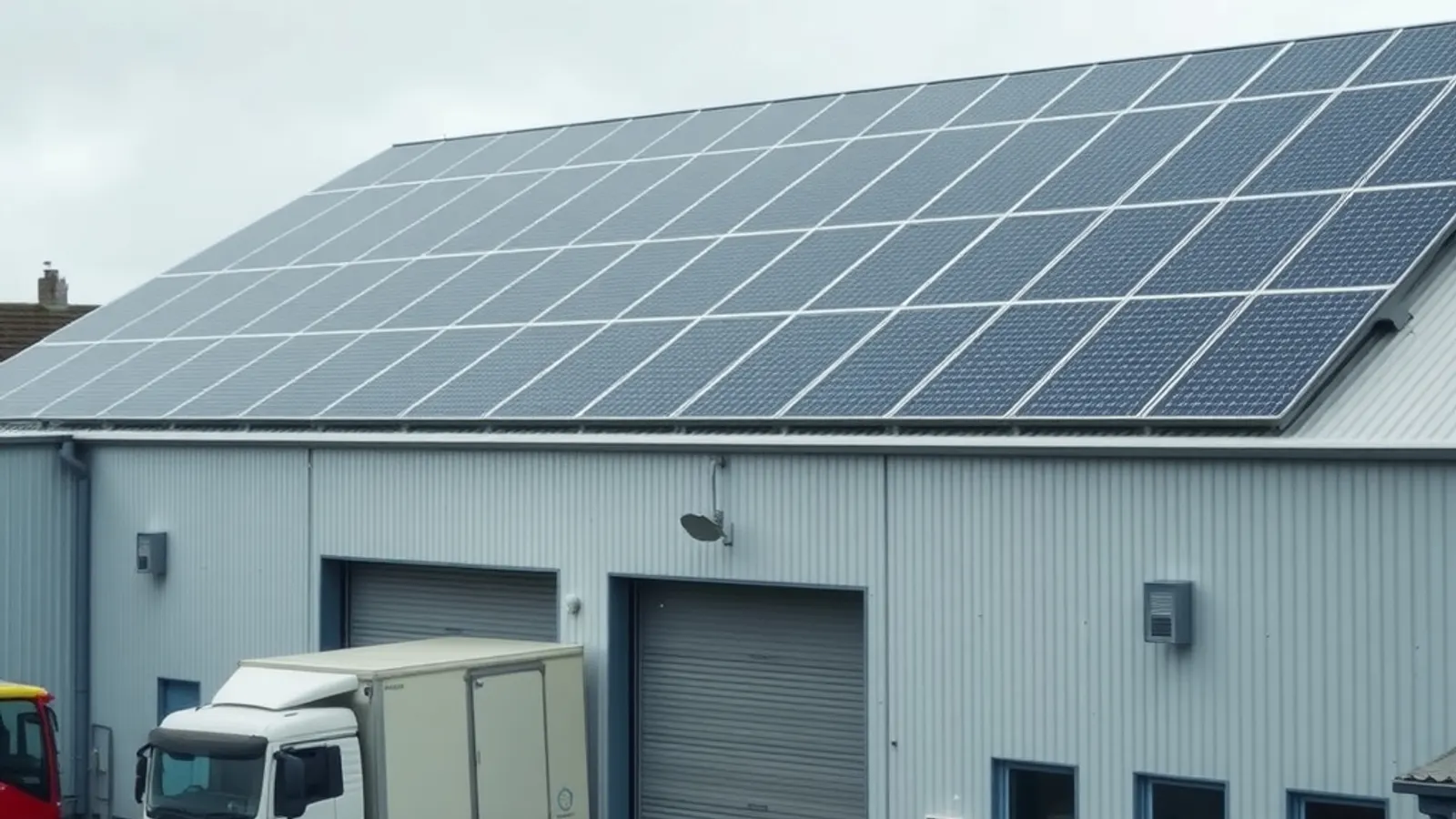
Does VAT apply to commercial solar? In most cases, yes: the standard rate of 20%. The zero rate for energy-saving materials is aimed at homes and some charity buildings, not at offices, warehouses, factories or shops. A VAT-registered business that makes taxable sales can normally reclaim the VAT it pays. That makes VAT mostly a cash-flow question. For some buyers, though, it is a real cost.
This post is general information, not tax advice. Your own VAT position depends on your facts, so check it with an adviser before you commit.
Which rate applies?
HMRC’s guidance on buildings and construction, VAT Notice 708 says the construction of a new building, and work to an existing one, is normally standard-rated. It lists installation of energy-saving materials as a reduced-rate item and sends you to a separate notice for the detail.
That notice, VAT Notice 708/6, explains the relief. Solar panels installed in residential accommodation are zero-rated until 31 March 2027. From 1 April 2027, the notice says supplies revert to the 5% reduced rate. Buildings used solely for relevant charitable purposes have been covered since 1 February 2024. The charity must use the building outside any business activity, or as a village hall or similar community facility.
An ordinary commercial building is not in the list. Because of that, for an office, warehouse, factory or retail unit, plan on 20%. That holds whether you use the power yourself, sell it under a power purchase agreement, or export it.
Hospitals, prisons, hotels and inns are specifically standard-rated in the same notice.
Can you reclaim it?
A VAT-registered business can normally recover VAT on costs that relate to its taxable business. For solar, that usually means the VAT on the panels, the installation and the design fees. You claim it as input tax on a VAT return.
Three situations reduce or remove that right:
- You are not VAT-registered. You cannot reclaim anything, so the 20% is a real cost on top of the price.
- You are partly exempt. If you make both taxable and exempt supplies, HMRC’s partial exemption guidance says you can recover only the part of shared costs linked to taxable supplies. There is a small-amounts rule: if your exempt input tax averages no more than £625 a month and is no more than half your total input tax, you can be treated as fully taxable.
- You have non-business use. If the same building serves both business and non-business purposes, the VAT must first be split between the two. Charities and public bodies meet this often.
Schools, colleges, care providers and landlords with exempt tenants are the usual cases. Ask about it early in the planning of any public-sector project.
The Capital Goods Scheme
Some large projects fall inside the Capital Goods Scheme. It makes a business watch the use of an asset over several years, and adjust the VAT it first reclaimed if its taxable use changes. HMRC’s Notice 706/2 sets the scheme out. Most items have an adjustment period of ten intervals, which are normally partial exemption tax years.
The threshold for land and buildings has changed. Revenue and Customs Brief 7 (2026) says the scheme now applies to land, buildings and civil engineering works only if the spend is £600,000 or more, excluding VAT. That is up from £250,000. It applies from 29 July 2026 to land acquired, and to buildings and works acquired, constructed, refurbished, fitted out, altered or extended, on or after that date. Items already in the scheme stay in until their adjustment period ends.
Whether a given solar project counts as capital spend on a building is a question for your VAT adviser. It depends on how the array is attached and how the contract is structured. If you are a landlord with a mix of taxable and exempt tenants, raise it before you sign, because the tenant mix can change the VAT you may keep.
Quick reference
| Situation | Rate | Can you reclaim it? |
|---|---|---|
| Office, warehouse, factory or shop | 20% | Yes, if VAT-registered and the use is taxable |
| Home or qualifying charity building | Zero until 31 March 2027, then 5% | Not an issue: the zero rate is applied at source |
| Partly exempt business | 20% | Only the share linked to taxable supplies |
| Not VAT-registered | 20% | No |
| Spend of £600,000 or more on a building from 29 July 2026 | 20% | Yes, but later adjustments may apply |
What about export income and VAT?
If you sell power or export it, VAT on those sales depends on whether you are VAT-registered, and on the buyer. I could not confirm a single official rule for Smart Export Guarantee payments from the Ofgem or HMRC pages I checked, so ask your adviser and your supplier. Our post on the Smart Export Guarantee explains how the scheme works.
Worked example (illustrative only)
Assume a VAT-registered warehouse owner is quoted £400,000 plus VAT for a rooftop system. VAT at 20% is £80,000. The owner pays £480,000 and, assuming full recovery, gets £80,000 back on the next return. The cash cost during the gap is £80,000, so finance or timing may matter. If the owner were partly exempt and could recover only 60% of the VAT, the unrecoverable VAT would be £32,000. The numbers are invented. They show how recovery rate changes the real price.
Putting VAT in the business case
Get the VAT position written into your model, not left to the supplier’s quote. A quote may show a price without VAT, and a board paper may then understate the cash needed. Our energy and ROI modelling service includes the VAT assumptions in every model. In a tender, procurement and tender support helps to check that the contract matches what you can reclaim.
For tax on the profit side, read why solar does not qualify for Full Expensing and our note for finance directors on corporation tax and solar cash flow. For the installed cost, see how much commercial solar costs in 2026.
Sources: HMRC, VAT Notice 708 buildings and construction; HMRC, VAT Notice 708/6 energy-saving materials; HMRC, VAT Notice 706 partial exemption; HMRC, VAT Notice 706/2 Capital Goods Scheme; HMRC, Revenue and Customs Brief 7 (2026).
VAT is one line in the model, yet it can change the answer for a business that cannot reclaim it. Our energy and ROI modelling shows the case with and without recovery. PPA and financing advice compares a PPA with buying outright. A feasibility study confirms the site, and procurement and tender support asks bidders to show VAT clearly.