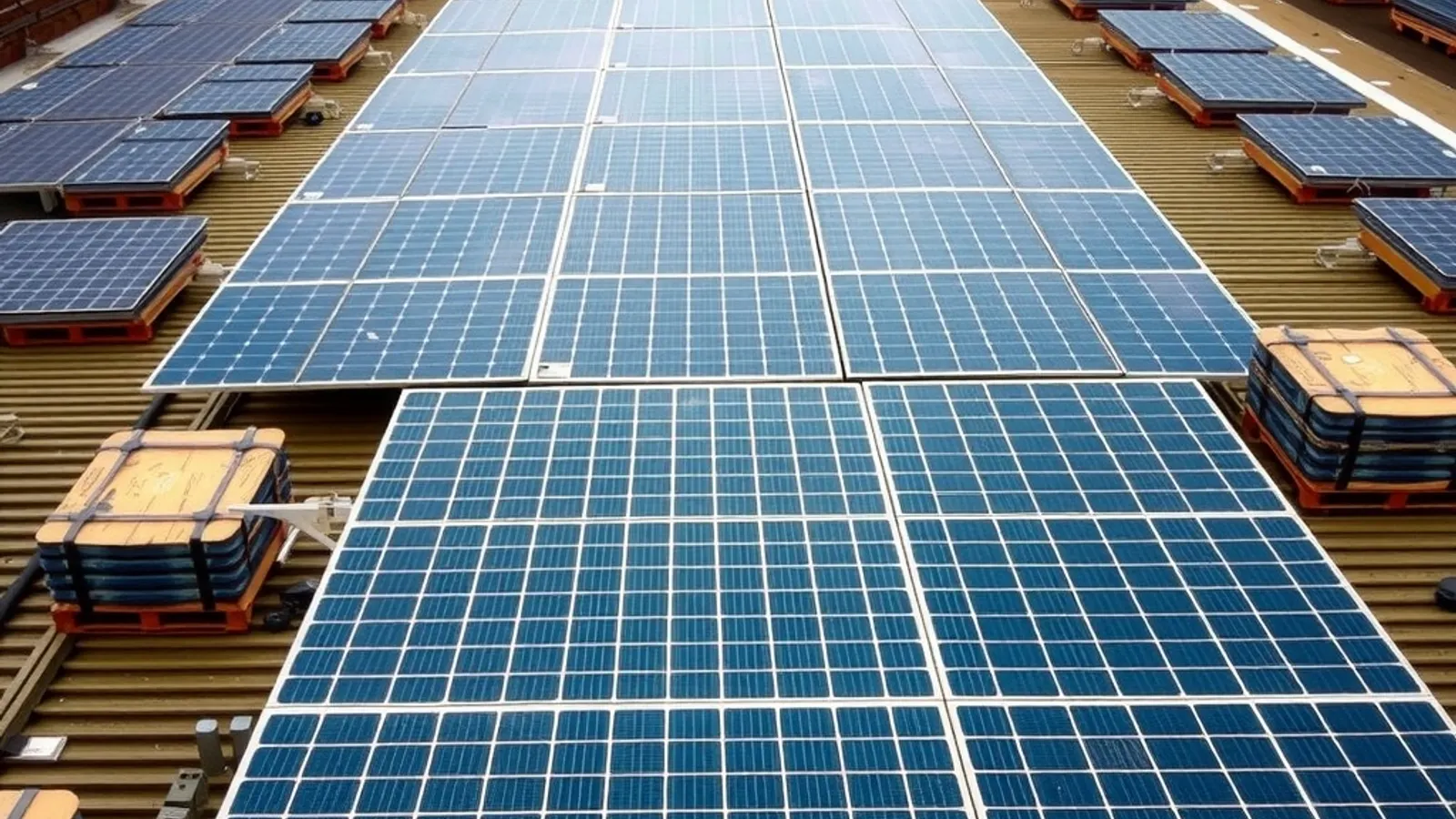
No, commercial solar does not qualify for full expensing. HMRC classes all spending on solar panels as “special rate” expenditure, and full expensing only covers main rate plant and machinery. A quote that promises “100% full expensing” on a solar system has used the wrong name. Some buyers still get 100% relief in year one, but through a different allowance with a ceiling.
What HMRC says about solar panels
HMRC’s Capital Allowances Manual is plain on this. From 1 April 2012 for corporation tax, all capital expenditure on solar panels is specifically designated as special rate. Before that date, panels usually landed in the special rate pool anyway, as integral features or long life assets.
Full expensing lets a company deduct 100% of the cost of new main rate plant and machinery from its profits in the year it buys it. HMRC’s guidance for companies says special rate assets get a 50% first-year allowance instead. The rule is permanent. It is also limited to companies, so a sole trader or a partnership cannot use it at all.
So the two statements fit together. Solar is special rate. Special rate spending gets a 50% allowance under that scheme, not 100%.
Where the wrong name comes from
Many solar buyers do get a 100% deduction in year one. They get it from the Annual Investment Allowance (AIA). The AIA is £1 million a year, and it lets you deduct the full value of qualifying items up to that limit. Sole traders, partnerships made up of individuals, and companies can all claim it.
The end result looks the same as full expensing, so salespeople use the better-known name. The difference only bites once spending passes the AIA limit.
What solar actually gets, in order
| Step | Relief | Rate | Who can use it |
|---|---|---|---|
| 1 | Annual Investment Allowance | 100% up to £1 million a year, shared across all qualifying spend | Companies, sole traders, qualifying partnerships |
| 2 | 50% first-year allowance for special rate spend | 50% of what is left after the AIA | Companies only |
| 3 | Special rate pool writing-down allowance | 6% a year on the balance | Everyone with a pool |
The 6% rate comes from the government’s policy paper on the 2026 changes, which states that the special rate pool is currently 6%. HMRC’s helpsheet HS252 adds that the unclaimed half goes into the special rate pool in a later accounting period.
An illustrative example
This example uses made-up round numbers. It is not a quote, and it ignores tax rates on purpose.
Assume a company spends £1.4 million on a large rooftop system and has no other qualifying spending that year.
- The AIA covers the first £1 million at 100%.
- The remaining £400,000 gets the 50% first-year allowance, which is £200,000.
- The other £200,000 joins the special rate pool and is written down at 6% a year. That is £12,000 in the first year.
So £1.2 million of the cost is relieved in year one, not £1.4 million. If the AIA is already used on a fleet purchase or a factory refit, more of the system falls into steps 2 and 3, and the relief arrives more slowly.
A sole trader in the same position would skip step 2. The £400,000 would go straight into the pool at 6%.
The 2026 changes did not touch solar
Two changes landed in 2026, and they muddy the water. The same policy paper introduces a new 40% first-year allowance for main rate spending from 1 January 2026. It also cuts the main pool writing-down allowance from 18% to 14%, from 1 April 2026 for corporation tax and 6 April 2026 for income tax.
Both changes apply to main rate expenditure. The paper says the special rate pool stays at 6%. A headline about new allowances can easily get folded into a sales pitch for solar, so check which pool each rate belongs to.
What this means for a payback figure
None of this makes solar a poor investment. It does change how you should test a business case.
- Ask which allowance the quote assumes. “Full expensing” for solar is a red flag, because the name is wrong.
- Check how much AIA your business has left this year. Related companies, such as those under common control that share premises or activity, share a single AIA.
- Run the payback twice: once with the full year-one deduction, and once with the slower route. If the project only works in the first case, say so to the board.
- Take advice from your accountant on your own position. This article is general information, not tax advice.
Our post on corporation tax and solar cash flow shows how the timing of relief feeds into cash flow, and our note on VAT on commercial solar installations covers the other tax that moves the price. For the wider cost picture, see how much commercial solar costs in 2026.
Getting your own numbers
The right allowance depends on your accounting year, your other capital spending and the size of the system. That is a modelling job, not a rule of thumb. Our energy and ROI modelling service builds the allowance route into the business case, so the payback figure rests on the relief you can actually claim. If you also need to compare buying with a lease or a PPA, our PPA comparison sets out the tax differences between the three routes.
Because the relief rules are easy to get wrong, put them in the model from the start. Our energy and ROI modelling applies the AIA and special rate allowances to your case. PPA and financing advice shows how relief moves to a funder under a PPA, while portfolio optimisation phases spending across years. A feasibility study comes first, so you only model a site that works.