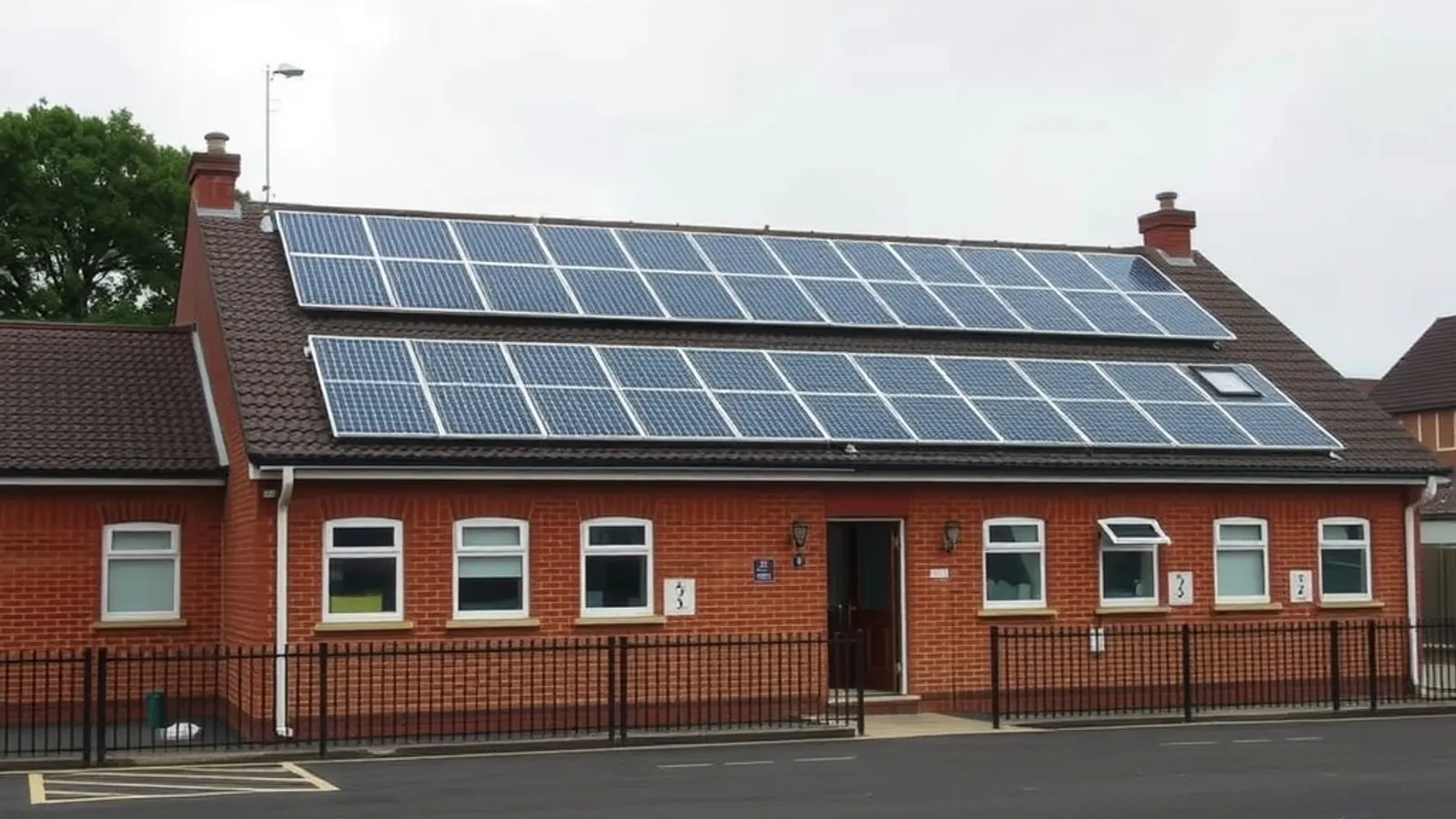
A public body that wants solar has two main ways to buy it. It can run its own competition under the Procurement Act 2023. Or it can call off a framework agreement where a national buyer has already run the competition. Which is better depends on the size of the project, how much procurement help you have, and how much control you want over the specification. This guide covers both, plus the rules on thresholds, standstill and performance indicators that catch teams out.
It is general information, not legal advice. Check your own organisation’s rules and your legal team’s view before you start.
What the Act changed
The Procurement Act 2023 took over from the old regulations for procurements that began on or after 24 February 2025. Anything you start now falls under the Act. Four changes matter most for a solar project.
Fewer procedures. The official guidance describes two competitive tendering procedures. The open procedure is a single stage, where anyone can bid. The competitive flexible procedure lets you design your own process. It can include shortlisting, dialogue or negotiation, as long as you say so in the tender notice. Direct award is allowed only in limited cases.
Central digital platform. Notices go through a single online service, the upgraded Find a Tender. Suppliers register once. Buyers should check what their own rules require on supplier registration.
Standstill. For most contracts, section 51 of the Act says you may not sign until eight working days after the contract award notice is published. The mandatory standstill does not apply to contracts awarded under a framework, so a call-off may be signed sooner, though you can choose to apply a standstill.
Performance indicators. For a public contract estimated to be worth more than £5 million, section 52 requires at least three KPIs, and you must publish them. Under section 71 you must assess performance against them at least once in every twelve months and when the contract ends, and publish the required information. The duty has exceptions, so check how it applies to your contract.
Thresholds
Contracts below the thresholds face lighter rules. The thresholds are reviewed every two years. The 2026 figures in Procurement Policy Note 023 apply to procurements that start on or after 1 January 2026:
| Type of contract | Threshold |
|---|---|
| Goods, services or works for a central government authority | £135,018 |
| Goods, services or works for a sub-central authority | £207,720 |
| Works contract | £5,193,000 |
A single rooftop system is unlikely to reach the works threshold on its own. A multi-site programme, or a design-and-build contract that bundles roof strengthening with the solar, is more likely to. How you count the contract value matters, so ask your procurement team to check the method before you split or bundle anything. Lots added together can change the answer.
Route one: run your own tender
You write the specification, the evaluation criteria and the contract. The typical path is a tender notice, bidder questions, evaluation, assessment summaries for bidders, a contract award notice, the standstill period, then signature. You own each step and the paper trail.
This route suits larger or unusual sites, programmes that cover many buildings, and buyers who want bespoke criteria, such as a heavier weighting for warranty terms. It takes longer.
Route two: use a framework
The Government Commercial Agency, formerly part of Crown Commercial Service, runs the Demand Management and Renewables framework, RM6314. The agreement page lists solar PV in lots 1.1 and 1.2. Lot 1.1 is for projects up to £1 million, and lot 1.2 is for £1 million and above. The same framework covers battery storage, heat pumps, heat networks and net zero consultancy.
Check the dates before you plan around it. The page shows the agreement running from 24 March 2023 to 23 March 2027, with no option to extend. A project that will not reach contract by then needs another route.
Using a framework does not remove your duties. You must follow the framework’s own call-off rules, and you still need a record of why you chose the supplier. But the market has already been tested and the core terms are set, which usually saves time on a standard site.
What auditors want to see
Public bodies must be able to show value for money after the event. Three habits help.
- Write an output-based specification. Solar quotes differ in panel count, inverter brand, warranty, yield assumptions and what is left out. If you do not fix those points, you compare bids that are not alike. See our post on what to check in a commercial solar contract.
- Keep the scoring record. Weighted scores against published criteria, filed with notes, turn a hunch into a defensible decision.
- Test the price. Compare bids with an independent view of cost for the size of system. Our commercial solar cost guides set out the bands. A bid far above or below them deserves a question before award.
Think too about how you will pay. Public bodies may buy outright, lease, or use a power purchase agreement. Our post on PPA, outright purchase and lease compares these, and it affects the contract type you tender.
Worked example (illustrative only)
Suppose a council wants solar on ten schools. Assume each system is worth about £150,000. One school alone is below the sub-central goods and services threshold of £207,720. Together the programme is worth £1.5 million, well above it. If the council plans the ten as one programme, it needs to treat the whole as one procurement and not split it to stay under the threshold. These numbers are invented. They show why the way you scope a programme comes first.
Where we help
An independent adviser can write the specification, run the questions and score the bids without a product to sell. That is what our procurement and tender support does for schools, universities and other public-sector buyers. If you are still deciding between an adviser and a supplier-led approach, read independent solar advisor or installer survey. For timing once the contract is signed, see how long a commercial solar installation takes.
Sources: Procurement Act 2023; Act, section 51, section 52 and section 71; GOV.UK, competitive tendering procedures; PPN 023, 2026 threshold amounts; Government Commercial Agency, RM6314.
Public buyers need a route that stands up to audit, because every step may be challenged. Our procurement and tender support runs the tender or the call-off, while a feasibility study sets the scope first. Energy and ROI modelling gives figures fit for a business case, and our net zero strategy work ties the scheme to carbon targets. Before you sign, read the due diligence checklist.