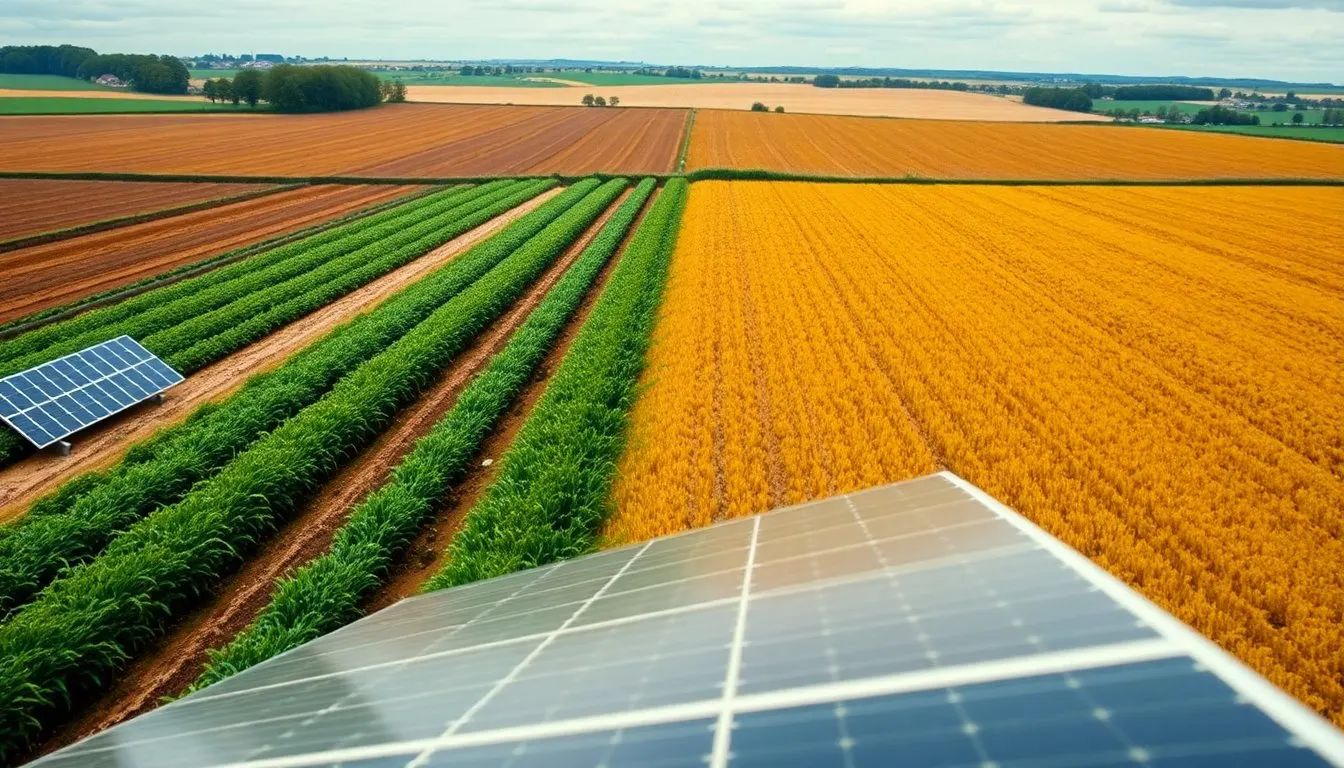
Land under a ground-mounted solar array stops being farmed, so it is a poor fit for the Sustainable Farming Incentive (SFI). The conflict is narrow, though. It applies to the ground the array actually uses. The rest of your holding is not affected by that fact alone. The real risk is paperwork: leasing land that is already in an agreement without telling the Rural Payments Agency (RPA).
This is general information. Scheme rules change often. Confirm the position for your own parcels with the RPA before you sign anything.
Where SFI26 stands in October 2026
The newest scheme, SFI26, has run its two application windows. According to the SFI26 scheme rules and guidance (version 4.0, updated 23 September 2026), window one closed on 28 August 2026 and window two closed on 22 September 2026. The page states that SFI26 is closed for applications. Defra’s farming blog says an SFI27 scheme is planned for 2027.
So if you do not already hold an SFI26 agreement, you cannot join this year. That changes the usual question. Many landowners are not asking whether to leave a live agreement. They are asking whether to plan a solar lease around the next scheme round.
Two other points from the guidance matter here:
- SFI26 agreements usually last three years. They must start by 1 April 2027.
- Funding is not guaranteed even for an eligible application, and each farm business can hold only one SFI26 agreement.
Older agreements carry on under their own terms. Defra said that when it stopped taking new SFI applications on 11 March 2025, existing agreements would be paid as agreed. If you hold one, read its terms before you plan a lease.
Is land with solar panels eligible?
The SFI26 guidance does not say in plain words that solar land is ineligible. Its Annex B lists “solar panels” among the non-agricultural land covers on the RPA’s digital maps, with its own land use code. Land mapped that way is not being farmed, and area-based actions need land cover and land use that match.
I could not find a passage that settles every case, such as a parcel that is partly covered. So treat the safe reading as the working rule. Do not count the footprint of a conventional array in any area-based action, and ask the RPA to confirm how your map should show it.
Does the whole farm lose eligibility?
Not on that ground alone. The guidance works by parcel and by land cover. A solar lease on one field is a change to that field. Other parcels, and features such as hedges, ditches and ponds, may still be eligible for their own actions. The guidance sets conditions for each action, so check the ones you hold or plan to take.
If you already have an agreement
If you lose management control of land, the guidance says you must tell the RPA in writing as soon as possible. If you sell, lease or otherwise transfer land, you must also tell the RPA, and it will usually remove that land from your agreement. It will not usually allow land to be removed unless it agrees that circumstances have changed.
The sensible order is simple:
- Tell the RPA about the planned lease before work starts.
- Get written confirmation of which land comes out of the agreement.
- Only then let the developer onto the land.
An early exit may still have consequences for payments already made. The guidance covers repayment and clawback in other sections, so check them or ask the RPA before you act.
Do the incomes compete?
For the area under panels, solar rent will normally matter more than agri-environment income on the same area. We have not put figures on that here, because both vary widely by site, option and negotiation. Our post on solar farm land lease payments in 2026 looks at rent. Set it against the actual payment rates of the actions you hold or plan to hold.
Remember the tax side too, because lease rent is property income, which affects relief on the wider holding. See how HMRC treats solar lease income.
What about grazing under panels?
This is the open question. Some systems raise panels high or space them wide so animals can graze below. Whether the RPA treats that land as farmed for SFI depends on its rules and on your layout. The SFI26 guidance does not address it, so do not assume. Get written confirmation for your site before you build it into a model. Our guide to agrivoltaics in the UK covers the farming side, and agricultural land classification and solar covers how land grade affects what developers want.
Timing a solar lease around SFI
| Your position | What to do |
|---|---|
| No agreement, and none planned | Draw the array boundary first, then map any future application around it |
| Live older agreement that overlaps the site | Tell the RPA before construction and get the land removed in writing |
| Agreement ending soon | Aim for the lease to begin at the natural end of the agreement |
| Land around the array | Check if margins and hedges can carry their own actions later |
If the timing allows it, let a current agreement run to its end and start the lease afterwards. It avoids change-of-circumstances paperwork and keeps the two income streams apart.
Worked example (illustrative only)
Assume a farm holds a three-year agreement with 3 years left on field A. A developer offers a lease on field A and field B. Field B is outside any agreement. The farmer could sign for both and tell the RPA. Or the farmer could ask the developer to start with field B and bring field A in when the agreement ends. The second path is slower but may avoid changes to the agreement. The right answer depends on the rent, the agreement payments and what the contract says. The facts here are invented to show the choice.
The practical takeaway
SFI and solar do not fight over the same ground in most cases. They meet at a boundary line, and the job is to draw it properly and tell the RPA in good time. Before you sign an option, check which parcels it covers, what is live on each one, and what the developer’s surveys might disturb. A feasibility study can map the site constraints, and our agriculture and land sector page explains how we work with landowners.
Sources: GOV.UK, SFI26 scheme rules and guidance; Defra farming blog, SFI26 update; GOV.UK, SFI applications stopped on 11 March 2025.
Because SFI and a lease can clash, time them together. A feasibility study checks which parcels suit solar. Energy and ROI modelling sets lease rent against lost scheme payments, while PPA and financing advice reviews lease terms. On a large holding, portfolio optimisation shows which fields to offer first.