Published guides put solar farm rents at roughly £850 to £1,100 per acre a year, or about £2,100 to £2,500 per hectare. That is several times what ordinary farming returns. But the rent is only half the picture. Letting land for solar usually ends its agricultural use, and that can cost you inheritance tax relief. Test any offer against both numbers before you sign an option.
If a letter from a developer has arrived, this guide gives you the benchmarks to compare it with, the things that move the rent, and the questions to put to your own advisers. It is general information, not tax or legal advice.
What the published figures say
Public data on actual lease terms is thin, because developers keep deals confidential. These are the sources we could check, with their limits.
| Source | Reported figure | Caveat |
|---|---|---|
| Stephens Scown (law firm) | £850 to £1,100 per acre a year for subsidy-free solar | Published in December 2021 and last reviewed in September 2023 |
| Savills research | About £2,500 per hectare is commonly quoted; Savills puts the true margin nearer £2,100 per hectare | Undated page; its tax example makes stated assumptions |
| Solar Energy UK report | Roughly £1,000 per acre a year for a long-term lease, against about £100 profit per acre for cereals (an NFU figure) | A trade body, with an interest in more solar |
One hectare is about 2.47 acres, so £2,500 per hectare is roughly £1,010 per acre. The sources agree on the range, but they are not recent transaction data. Treat them as a place to start a negotiation, not a market price.
An illustrative example
These numbers are made up to show the sums. They do not describe a real offer.
Say a developer offers a 50-acre field at £1,000 per acre a year. That is £50,000 a year before costs and tax. Farming the same field might return £100 profit per acre, or £5,000. The gap is large, which is why developers can pay it. But if the field is inside your estate’s agricultural relief today, the lease changes your inheritance tax position (see below). Your adviser should model the rent after tax against the farming alternative over the whole term.
What moves the rent
- Grid. Proximity to a substation with spare capacity saves the developer money, and the rent can reflect it. Our guide to rural grid connections explains how headroom varies.
- Size and shape. Large, regular, unshaded sites are cheaper to build per megawatt.
- Land quality. Planning guidance asks councils to consider whether poorer quality land has been used in preference to higher quality land and encourages large solar on previously developed and non-agricultural land. Better land can face a harder planning case, which is a risk for the developer and for you. Our guide to agricultural land classification and solar leases covers the grades.
- Consenting route. In Scotland, schemes above 50MW follow a different route, as our guide to Section 36 explains.
- Lease terms. Stephens Scown describes leases of 30 to 50 years. The length, any break rights, and how rent is indexed all matter. A fixed annual uplift and a link to inflation can diverge over decades. Revenue top-ups are another common feature: the same firm says a landowner may be paid the difference when a share of the developer’s revenue exceeds the base rent.
- Competition. A developer with no rival has little reason to move off its first offer. Independent advice and a second bidder both help.
The inheritance tax catch
Savills states that agricultural land farmed by a trading business, or let on a Farm Business Tenancy, can qualify for Agricultural Property Relief (APR), and that letting land for solar ends its agricultural use, so APR is lost on it. Under a solar lease the land is generally treated as an investment asset, so Business Property Relief may not apply either, unless your overall business counts as trading.
The rules on these reliefs have changed. The Government announced on 23 December 2025 that the 100% relief threshold would rise to £2.5 million per estate from 6 April 2026. Above it, 50% relief continues to apply to qualifying assets. A surviving spouse or civil partner can pass on up to £5 million of qualifying assets.
What does that mean for a lease? Land inside your relief allowance today can fall outside relief once let for solar. The bigger allowance does not fix this, because the land no longer counts as agricultural property. Whether leasing is still right for you depends on your estate, your family and your plans. Get specialist tax advice before you sign. Our guide to solar lease income and tax covers how the income itself is taxed.
Can grazing keep the land agricultural?
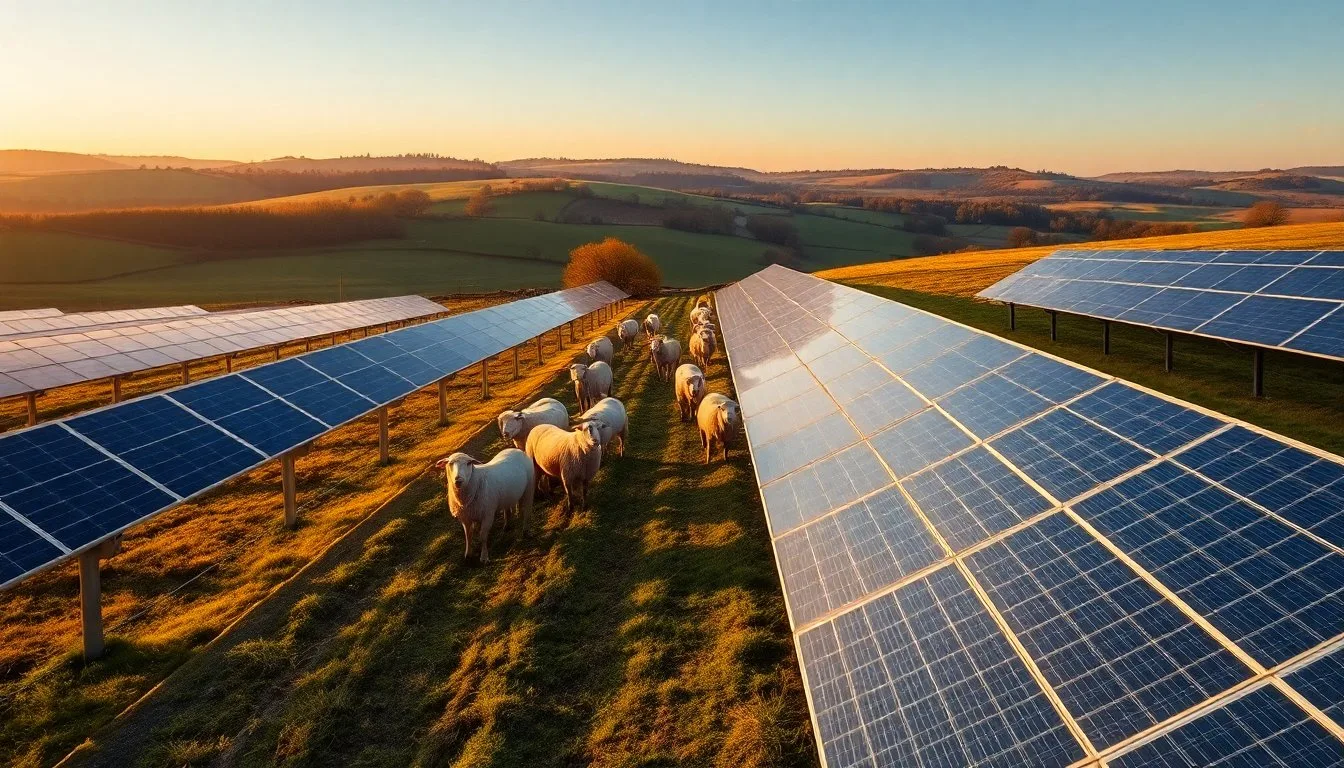
Some schemes keep sheep under and between the panels, which is called agrivoltaics. Planning guidance says proposals should allow farming to continue where applicable. Ask the developer about it at heads-of-terms stage. Whether grazing preserves any tax relief on your land is a question of fact for your tax adviser, not a general rule. Our guide to agrivoltaics in the UK explains what it involves. If you claim farm payments, see also our note on the Sustainable Farming Incentive and solar.
Weighing a lease against your own solar
A lease and an on-site system solve different problems. A lease is low risk, although it hands over the land. On-site solar uses your own capital and power. Our land lease versus on-site solar guide sets them side by side.
If a lease looks right for your site, our energy and ROI modelling puts the rent, the lease terms and the tax position next to the alternative, so the number in the letter is tested before you commit. Our work for agriculture and land owners follows the same approach.
Before you sign heads of terms, compare the offer with the alternatives. Our energy and ROI modelling sets rent against owning an array, while PPA and financing advice reviews the lease terms. A feasibility study checks grade and grid, and portfolio optimisation helps an estate decide which fields to offer.