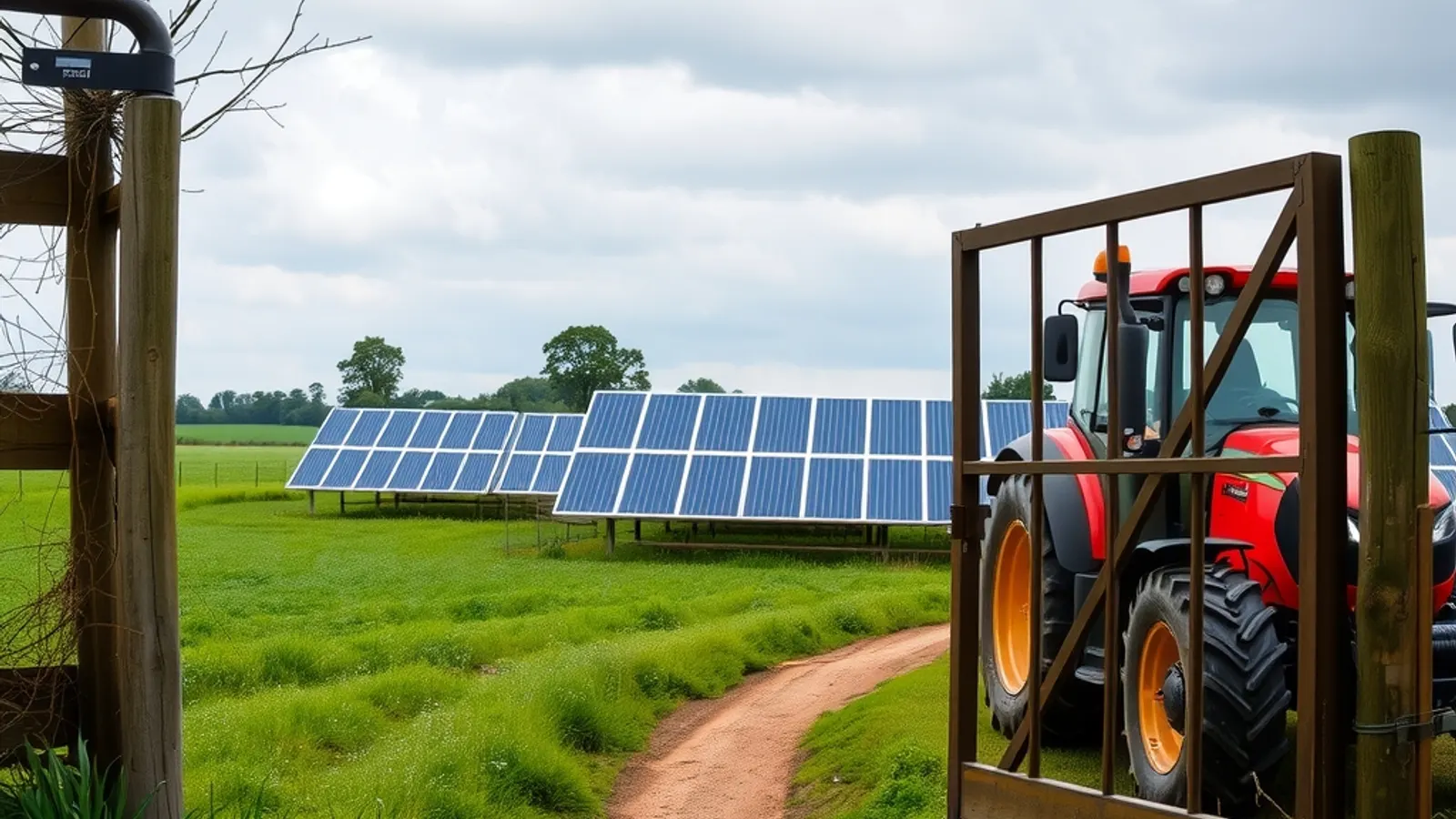
A tenant farmer cannot, on their own, grant a developer a long solar lease over land they rent. They can only pass on what they hold, and that is a tenancy, not the land. The landlord owns the land. So any solar deal on tenanted farmland needs the landlord, the tenant and the developer all to agree, in writing, before anyone signs.
If you are the landlord, the tenant, or a business weighing up a site, this is the order of questions that settles who can sign.
Which kind of tenancy is it?
Start with the date. GOV.UK explains the two main types of agricultural tenancy:
- 1986 Act tenancies, agreed before 1 September 1995 under the Agricultural Holdings Act 1986. They usually give the tenant security of tenure for life.
- Farm Business Tenancies (FBTs), agreed after that date under the Agricultural Tenancies Act 1995. These are fixed-term or periodic and are far more flexible.
The type shapes everything that follows. With a 1986 Act tenancy the tenant is hard to move, so a landlord who wants solar on that land usually needs the tenant’s cooperation. With an FBT, the written terms and the notice period matter most.
What does the tenancy agreement allow?
Read it first, because it will say what the tenant may use the land for, and whether the tenant can sublet or part with possession without the landlord’s consent. Many agricultural tenancies bar the tenant from assigning, subletting or parting with possession without the landlord’s written consent. Whether yours does is a matter of the exact wording.
GOV.UK also notes that an FBT must stay mainly agricultural unless the parties exchange notices before it starts. That is aimed at stopping a farm business tenancy turning into something else by drift. A tenancy that was never set up for diversification may need its terms varied before any solar activity.
If the agreement is silent or unclear, do not guess. Get a land agent or a solicitor who works on agricultural tenancies to read it.
Who gets to sign, in practice?
It depends on what the developer wants.
| Situation | Who normally needs to agree |
|---|---|
| Solar on land the tenant has let go | Landlord and developer sign. The tenant must first have ended or reduced their tenancy over that land. |
| Tenant keeps farming, solar on part | Landlord, tenant and developer, with the tenancy varied to remove that part |
| Tenant wants rooftop solar on their own farm buildings | Usually the tenant, but the landlord’s consent is often needed for alterations and the tenancy terms decide |
| Tenant wants to sublet land for solar | Landlord’s written consent, and the tenant is bound by the head lease |
These are patterns, not rules, because the tenancy agreement and the facts can change the answer.
How can a landlord free up the land?
By agreement, in most cases. A landlord can:
- agree a surrender of part of the land with the tenant, often with a payment or a rent reduction
- agree a variation of the tenancy to take that part out
- serve notice to quit, which has formal requirements and, for a 1986 Act tenancy, can lead to compensation for the tenant
The notice rules are different for each type. GOV.UK says the minimum notice period for an FBT is 12 months, while a notice to quit under the 1986 Act can lead to compensation for disturbance. Landlords should not try this alone. A badly served notice can be invalid, and a tenant who is unhappy can slow the whole project.
Developers should also ask for proof that the tenancy has really ended. A signed lease from the landlord is worth little if the tenant is still in possession.
Does the new arbitration rule help a tenant who wants solar?
Be careful here. Section 19A of the Agricultural Holdings Act 1986 lets regulations send certain requests to arbitration. These include a request for a landlord’s consent or a change of terms. But the section is linked to specific purposes, such as applying for certain government support or meeting a legal duty. It is an enabling power for England and Wales. A tenant should not assume it can force a landlord to accept a commercial solar lease.
How should a fair deal be set up?
Both sides give something up, so it helps to be clear about the money.
- Tenant: loses farmed land, so ask for a rent reduction, a payment, or both. Ask what happens to any grants or support tied to the land.
- Landlord: gains solar rent but may give up the farming rent on that part, and takes on the long-term job of dealing with a developer.
- Developer: needs a clean title to the land for decades and a clear route for cables and access.
Our guide to solar farm lease payments covers what rents look like. For the land’s farming value, see our post on agricultural land classification. Support schemes can also be affected, which our post on farm support payments and solar looks at.
What about rooftop solar on a tenanted farm?
This is simpler. A tenant who wants panels on their own barn roof is not asking to give up land. They still usually need to check the tenancy for rules on alterations, and a landlord’s consent may be needed. The roof may also need a structural check, which our roof survey guide covers.
Who owns the panels, and what happens at the end of the tenancy, should be written down. A sensible agreement says whether the tenant removes the system, sells it to the landlord or leaves it in place.
A short checklist before anyone signs
- Confirm the tenancy type and read the full agreement.
- Check that the landlord’s title is clear, including any mortgage lender’s consent.
- Agree in writing what the tenant gives up and what they receive.
- Make sure any surrender or variation is completed before the solar lease starts.
- Take independent legal advice on each side.
Where we can help
We are independent. We do not take a share of any lease, and we do not act for developers. Our procurement and tender support service helps landowners compare offers and understand terms, and our agriculture and land sector page explains how we work with farm businesses. This post is general information, not legal advice.
Sources: GOV.UK, agricultural tenancies; Agricultural Holdings Act 1986, section 19A; Agricultural Holdings Act 1986.
Because the answer depends on the tenancy, get the legal position first, then the numbers. Our energy and ROI modelling splits rent and compensation between landlord and tenant. A feasibility study checks whether the land suits solar, while PPA and financing advice reviews the lease terms a developer offers. On an estate with several tenancies, portfolio optimisation shows which land to offer first.