Yorkshire & the Humber
Yorkshire and the Humber splits into cereal and arable land in the east and livestock farms towards the Pennines. Its industrial roofs round the Humber use power all day. Northern Powergrid runs the network.
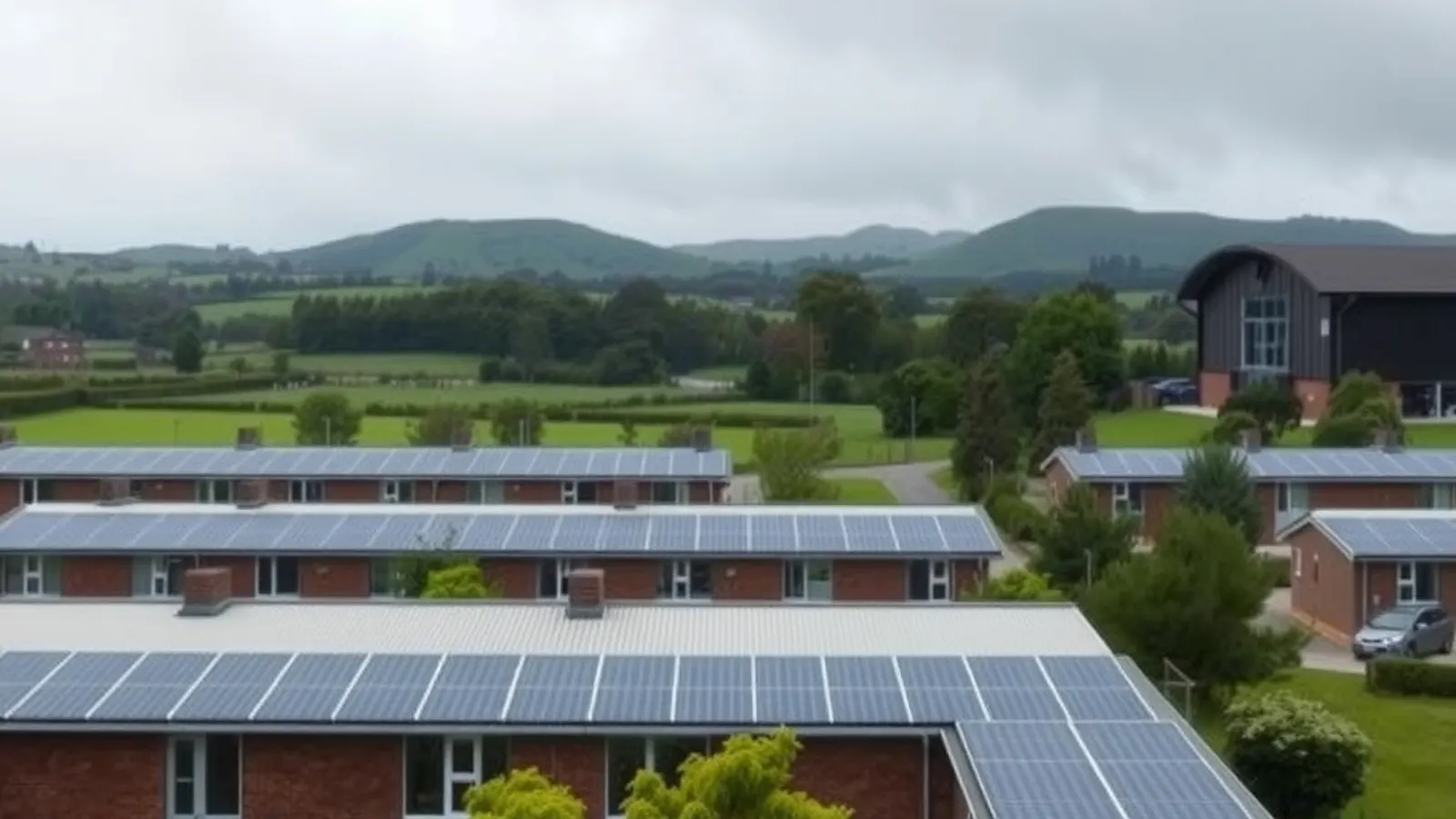
Figures for Yorkshire & the Humber
- Average farm
- 91 hectares, against 87 for England (Defra, 2024)
- Land use
- 53% arable and 32% permanent pasture
- Farm types
- 41% of holdings are grazing livestock; cereals are 20%
- Pigs
- 1.46 million, 40% of England's herd
- Yield per kWp
- About 989 kWh in Hull, 969 in York, 949 in Thirsk (PVGIS)
Defra's 2024 survey shows a region of two halves. Arable land covers 53% of the farmed area and permanent pasture 32%, and grazing livestock make up 41% of holdings against 20% for cereal farms. The Pennine side leans to livestock, with smaller fields. Land in the east leans to cereals and larger blocks.
Yields are lower than on the south and east coasts. PVGIS models about 989 kWh a year per kilowatt-peak at Hull, 969 at York and 949 at Thirsk, against 1,083 at Ipswich. A Yorkshire scheme needs its cost and its self-use share to carry more of the case, which makes load matching more important.
Pigs add a load worth noting. The region holds 1.46 million, 40% of England's herd, and intensive pig and poultry units run ventilation and heating around the clock. Poultry totals 15 million birds. Those buildings have long, simple roofs and a steady demand.
The Humber's ports and process industry give the east of the region another strong roof market. The question for any site there is the same: how much of the output the plant uses itself, and how much of its import capacity the connection can release. Northern Powergrid, which serves the region, publishes network capacity information, and it is the first place to look.
Land and farming
Arable land covers 53% of the farmed area and permanent pasture 32%. Grazing livestock are 41% of holdings, cereals 20% and general cropping 17%. The region keeps 40% of England's pigs.
Network and grid
Northern Powergrid serves Yorkshire and the Humber. Ask it for capacity data on the substation nearest your site, and ask how any export limit would apply.
Counties covered
Related sector pages
Sources & further reading
Frequently asked questions
Does Yorkshire need a different approach from East Anglia?
Partly. Because the yield is a little lower and the holdings are smaller on average, the case leans more on self-use. We test each site on its own data.
Do the Humber's industries affect a farm's connection?
They share the regional network, so spare capacity near the estuary can still be tighter than a rural site suggests. We ask the operator and do not assume.
Insights for Yorkshire & the Humber
Based in Yorkshire or the Humber?
Tell us the buildings, the livestock or the plant load, because each changes the case. We will say what the first check should be.