Wales
Sheep dominate Welsh farming. Welsh Government treats best and most versatile land as a protected resource, and a free map shows where it lies. North and south Wales have different network operators.
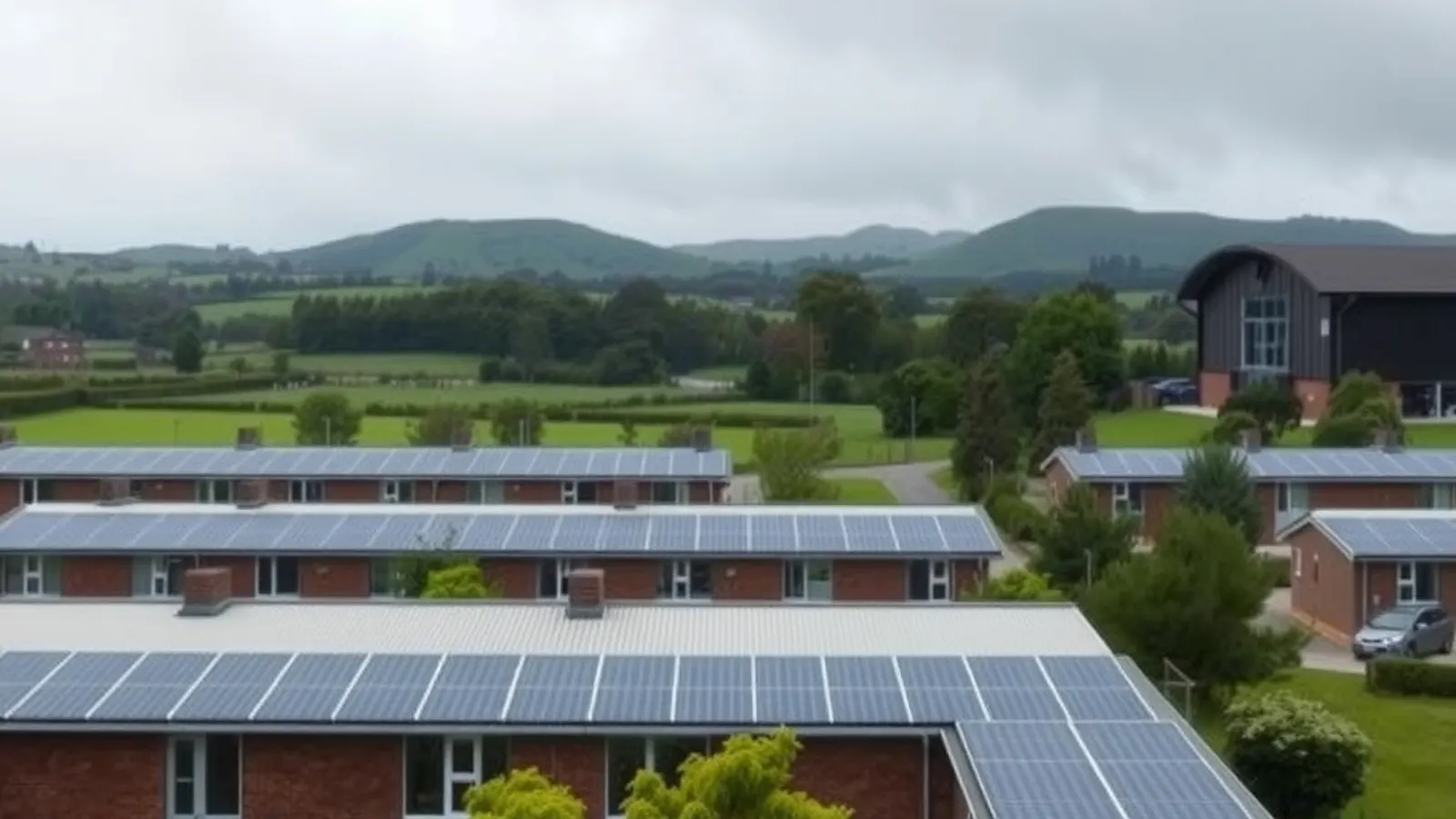
Figures for Wales
- Sheep
- 8.7 million sheep and lambs (Welsh Government, June 2024)
- Cereals
- 53,000 ha, under 3% of agricultural land
- Yield per kWp
- About 1,042 kWh in Cardiff, 987 in Carmarthen, 843 in Machynlleth (PVGIS)
- Network operators
- NGED (south and mid Wales), SP Manweb (north Wales)
Welsh Government's June 2024 survey counted 8.7 million sheep and lambs, and only 53,000 hectares of cereals, less than 3% of agricultural land. Most farmland is grass. For solar, the map is set by a policy as much as by farming.
That policy sits in Planning Policy Wales. A letter of March 2022 from the climate change minister to planning officers restates it. Land in grades 1, 2 and 3a is best and most versatile (BMV) and must be well protected. For solar on BMV land, the letter says permission will need to be refused unless other big factors point the other way. Councils must consult Welsh Government before approving a plan-breaching scheme that would lose 20 hectares or more of BMV land. Smaller losses count if they are likely to reach 20 hectares in time.
The practical step is to look before you plan. Welsh Government publishes a free Predictive ALC Map 2 that shows where BMV land is likely to lie, and it offers a free validation service for ALC survey reports. The survey itself is technical, so commission it before other feasibility work, not after.
Yield swings more across Wales than the map suggests. PVGIS models about 1,042 kWh a year per kilowatt-peak in Cardiff, 987 in Carmarthen and 843 in Machynlleth. A mid-Wales hill farm gets a fifth less from the same panel than a site on the south coast, which hits the economics of a ground array hard.
North and south Wales have different network operators. NGED serves the south and mid Wales, and SP Manweb serves the north. Each has its own application process and capacity data. Large schemes follow Welsh consenting routes that have been changing, so check current thresholds with Welsh Government.
Land and farming
Sheep farming dominates, with 8.7 million sheep and lambs in June 2024. Cereals cover 53,000 hectares, under 3% of agricultural land, so most farmland is grass.
Network and grid
NGED serves south and mid Wales, while SP Manweb serves north Wales. Each publishes its own capacity data and runs its own queue, so the nearest usable connection and its cost differ by side of the country.
Counties covered
Related sector pages
Sources & further reading
Frequently asked questions
Does Wales treat solar planning differently from England?
Yes, in one important way. Welsh Government must be consulted when a proposal off the development plan would lose 20 hectares or more of BMV land, and its policy is to object to solar on BMV land unless other considerations outweigh the loss.
Can sheep stay on land leased for solar?
Often, with a suitable design. Still, we check your stock, fencing and panel height before a lease is agreed.
Insights for Wales
Holding land in Wales?
Send the county, the field sizes and any ALC grade you know. Since grade drives the planning risk, we will say what to check first.