South West England
The South West is England's dairy heartland, and dairy sheds use power every day of the year. The grid is the harder part. The network operator reports limits caused by solar and battery projects.
Figures for South West England
- Dairy herd
- 406,000 dairy cattle, 39% of England's total (Defra, June 2024)
- Farm types
- 47% of holdings are grazing livestock; dairy is 7.4%
- Land use
- 44% permanent pasture, 45% arable; average farm 68 ha
- Yield per kWp
- About 1,066 kWh in Truro, 1,052 in Exeter, 1,023 in Bristol (PVGIS)
- Network operator
- National Grid Electricity Distribution (South West)
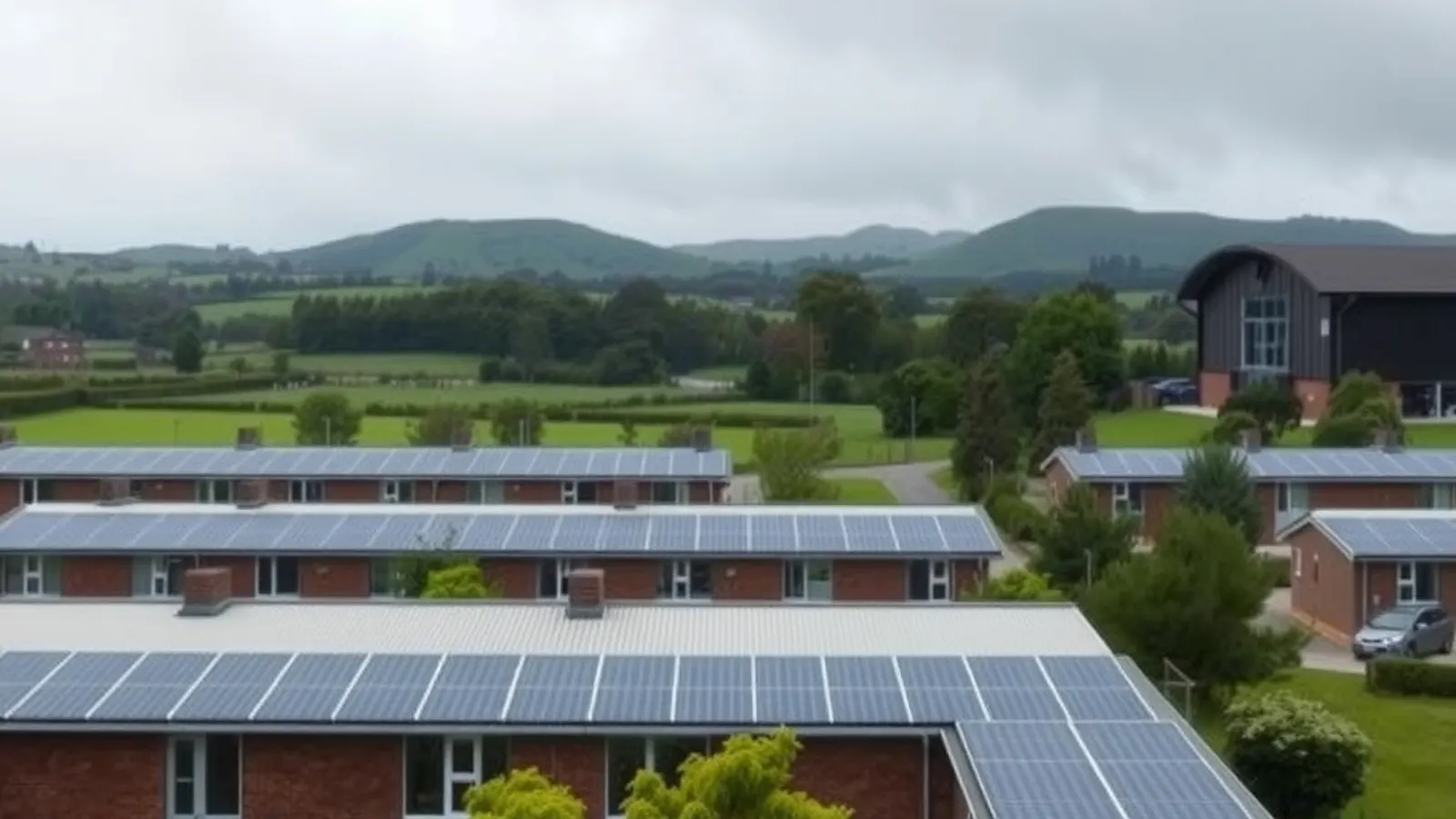
The region holds 39% of England's dairy cattle, according to Defra's June 2024 survey. A parlour, a milk tank and a cubicle shed draw power every day, and that steady load is a good match for a roof array. For a dairy unit the sensible size is the one the herd's daily demand can use, not the largest system the roof could hold.
Sunshine is good, yet not unique. PVGIS models about 1,066 kWh a year from each kilowatt-peak in Truro and 1,052 in Exeter. The East of England matches that, with 1,083 in Ipswich. So the South West case rests on its farms and its prices, not on a special solar resource.
The grid is the limit to plan around. NGED's South West report of May 2024 says a high volume of new connections, mainly batteries and solar, has caused constraints where the distribution network meets the national grid. It names limits on transformer capacity, on 275 kV and 400 kV circuits and on 132 kV fault levels. NGED is discussing new grid supply points at Axminster, Indian Queens, Alverdiscott, Abham and Iron Acton. A farm roof array is small beside those projects, but it uses the same network. Ask NGED early and check its capacity map.
Fields in the region are smaller and more irregular than in the east. That favours roofs first, and for land, smaller screened arrays or grazed designs over single large blocks. Whatever the layout, a scheme above 100 MW in England goes to the Secretary of State, and smaller ones to the local planning authority.
Land and farming
Grazing livestock is the largest farm type, with 47% of holdings, and dairy is 7.4%. Permanent pasture covers 44% of the farmed area and arable 45%. The average farm is 68 hectares, below the English average of 87.
Network and grid
NGED serves the South West. Its May 2024 report ties grid limits to solar and battery connections, and it is weighing new supply points in Devon, Cornwall and Somerset. Check its capacity map before you draw up a scheme.
Counties covered
Related sector pages
Sources & further reading
Frequently asked questions
Is the South West grid too full for a new solar connection?
Not everywhere. However, NGED's own report describes limits caused by solar and battery connections. We check the data for your substation and do not assume spare room.
Can the herd stay on land that carries solar?
Sheep grazing under panels is established practice, while cattle depend on fencing and panel height. We test your stock and layout before ruling it out.
Insights for South West England
Farming in the South West?
Send the parish, the shed roofs and the herd size. We will say what to check with NGED first.