Scotland
Scotland consents solar under its own rules. Schemes over 50 MW go to Scottish Ministers under section 36, and smaller ones to the local authority. Yield falls from the south to the Highlands, and two operators run the network.
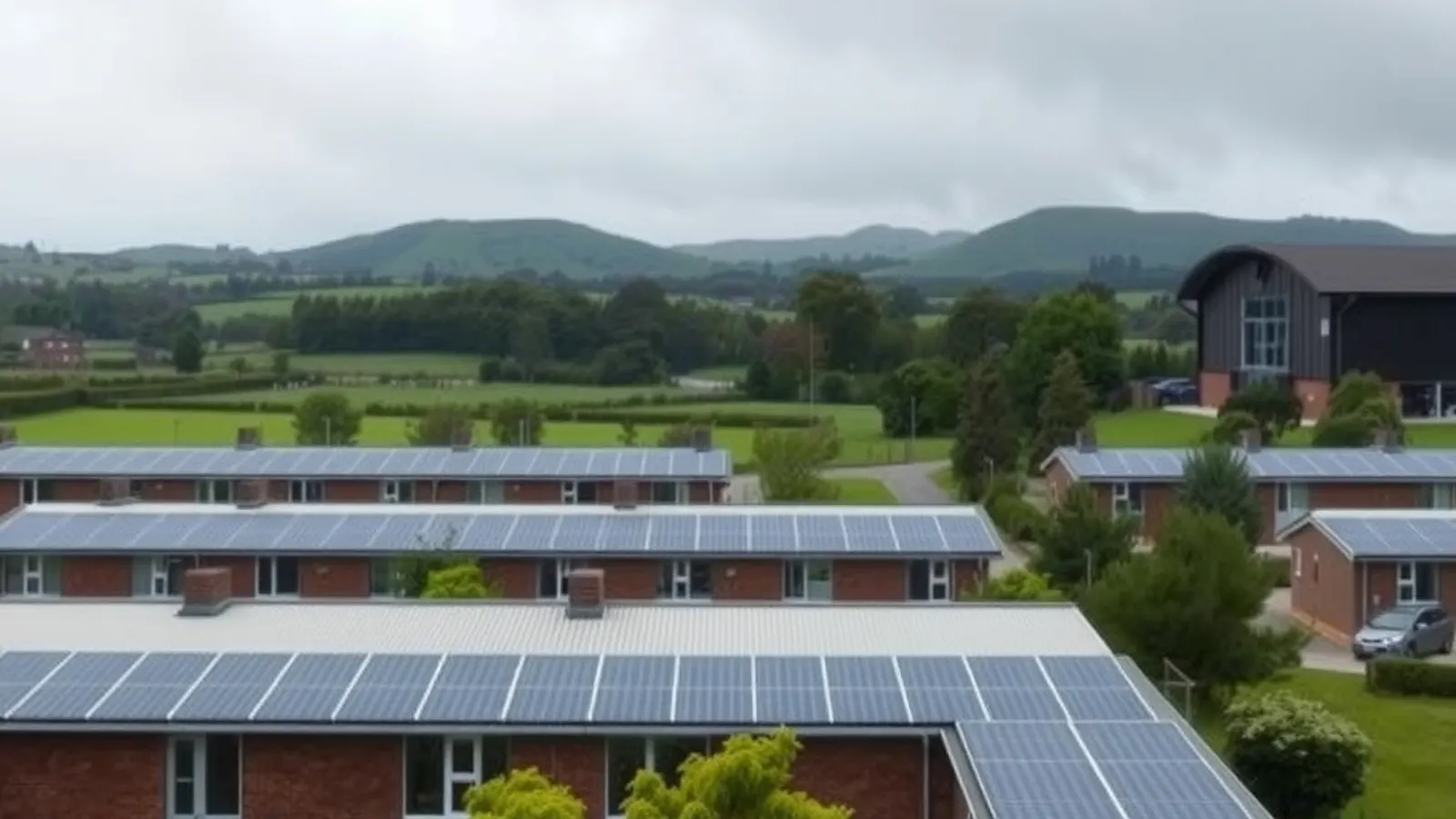
Figures for Scotland
- Agricultural land
- 5.16 million ha, 66% of Scotland (June 2024 census)
- Consent route
- Over 50 MW goes to Scottish Ministers. Smaller schemes go to the council.
- Yield per kWp
- 938 kWh in Dundee, 904 in Edinburgh, 811 in Inverness (PVGIS)
- Network operators
- SSEN (north), SP Energy Networks (central and south)
Scotland has its own planning system. A power station over 50 MW needs consent from Scottish Ministers. The law is section 36 of the Electricity Act 1989. A government team, the Energy Consents Unit, runs the process. Anything smaller goes to the local council.
Community engagement is built in. A power station of 20 MW or more counts as major development. That means talking to the community before you apply. The first step is a notice to the council, which councils say must go in at least 12 weeks before the application. Build that time into your plan.
Rooftops follow a different path. Circular 2/2024 from the Scottish Government covers panels on non-domestic buildings. They are permitted development if no part sticks out more than 1 metre. Exclusions include listed buildings and road-facing walls in conservation areas. Free-standing panels in the grounds of a non-domestic building are capped at 12 square metres. So a barn-roof array can often go ahead without an application. A ground array of any real size needs one.
Yield falls towards the north. PVGIS models about 938 kWh a year per kilowatt-peak at Dundee, 904 at Edinburgh, 887 at Aberdeen and 811 at Inverness. Exeter gets 1,052. A Highland scheme needs lower costs or more self-use to match a southern site.
Two firms run the network. SSEN covers the north and publishes maps of spare capacity for new generation. SP Energy Networks covers central and southern Scotland. Each has its own application process.
Land and farming
Farmland covers 5.16 million hectares, 66% of Scotland, although hills and mountains are mostly rough grazing.
Network and grid
SSEN serves the north of Scotland. SP Energy Networks serves the central belt and the south. SSEN publishes capacity maps, which are the first check for a scheme.
Counties covered
Related sector pages
Sources & further reading
- gov.scot — Electricity Act 1989, sections 36 and 37: applications guidance
- gov.scot — Circular 2/2024: non-domestic permitted development rights (solar panels)
- gov.scot — Results from the Scottish Agricultural Census: June 2024
- Scottish Borders Council — Major developments and pre-application consultation
- European Commission JRC — PVGIS
Frequently asked questions
Is Scottish planning for solar the same as England's?
No. Scottish Ministers decide schemes over 50 MW, while smaller ones go to the council. Major schemes must consult the community first.
Do I need permission for solar on a barn roof?
Often not. Circular 2/2024 gives permitted development rights if panels stick out no more than 1 metre and no exclusion applies. Check your building against the circular.
Insights for Scotland
Holding land or buildings in Scotland?
Say where the site is and whether it is roof or field, since the consent route differs. We will outline it and the first checks.