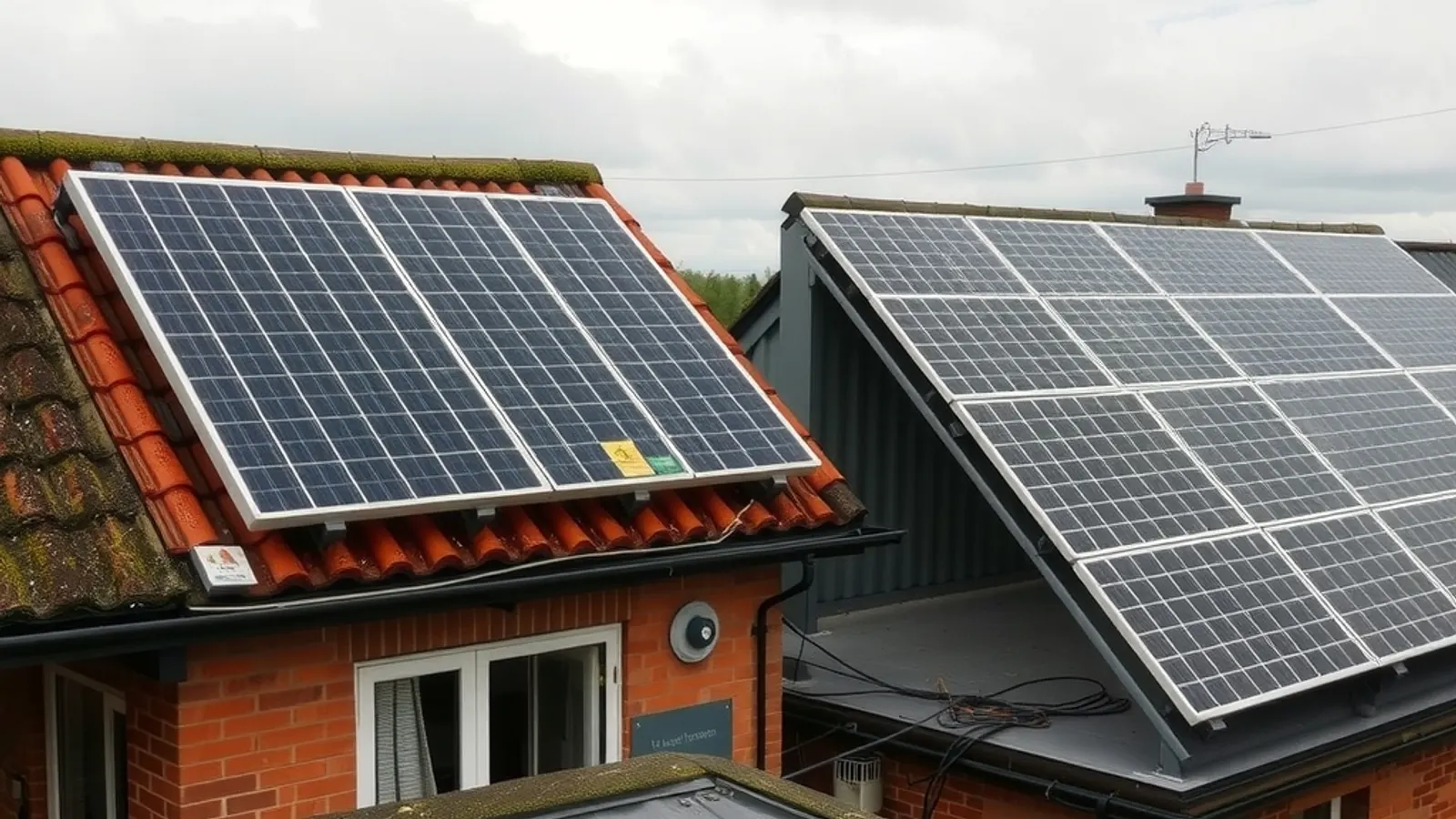
New commercial solar can no longer join the Feed-in Tariff (FIT). Ofgem confirms that the scheme closed to new applicants from 1 April 2019. The Smart Export Guarantee (SEG) now pays for electricity you send to the grid. It does not pay for electricity you generate. If a business case still assumes a payment for every unit produced, it rests on a scheme that is shut.
What the Feed-in Tariff paid for
FIT was a state scheme for small renewable power, solar among it. A FIT licensee paid approved generators every quarter at least, using meter readings. It paid in two parts.
- A generation tariff. A set rate for each kilowatt-hour the system produced, whether you used it on site or not.
- An export tariff. A separate payment for power sent to the grid.
The generation payment made early solar paybacks look so strong. You earned money from every unit made, while you also saved on power you no longer had to buy.
What the closure changed, and what it did not
Closure only stopped new entrants. Ofgem says it “doesn’t affect installations which are already accredited”. Support lasts from 10 to 25 years, depending on type, size and start date. So an old array is still paid on its original terms.
Existing FIT owners still carry duties. Ofgem says you must tell your FIT licensee about these changes while the scheme runs for you:
- battery storage added to the installation
- a meter replaced or moved
- generating equipment replaced
- extra capacity added
That matters if you plan to add a battery to an old array, because you must report it. Read your FIT terms before you order anything. Our guide on whether battery storage is worth it covers the cost side.
Ofgem also says tariff rates follow inflation. Up to and including FIT Year 16, they were adjusted by the Retail Price Index. Since FIT Year 17, they follow the Consumer Price Index.
What replaced it
The Smart Export Guarantee launched on 1 January 2020. Although it replaced part of FIT, it differs in three ways.
- It pays for export only. There is no payment for generation. Ofgem states that SEG payments are calculated from export meter readings.
- The supplier sets the rate. Ofgem only requires that a SEG tariff stays above zero. The licensee decides the price and the contract length, as Ofgem’s guidance for generators explains.
- You choose the buyer. You can use any SEG licensee, even if it is not your current electricity supplier.
The size limit suits business sites. The Smart Export Guarantee Order 2019 sets a maximum of 5 megawatts of installed capacity. Solar, wind, hydro and anaerobic digestion all qualify. Micro-CHP is capped at 50 kilowatts.
Systems that qualified for FIT can also join SEG. They need an export or smart meter that records every half hour. Ofgem states this in the same FIT guidance.
What this means for a business case
The change in shape matters more than the change in name. Under FIT, generation income was almost guaranteed. Under SEG, the return comes mainly from the power you stop buying. Export is a bonus, because its price can change.
A few practical points follow from that.
- Size for use, not for export. A supplier sets the export rate, and it is usually well below the price you pay to import. A system sized to match your daytime demand is likely to beat one sized to maximise export. Your own half-hourly data shows which case you are in.
- Treat export income as a sensitivity. Run the model with export at a low rate and at a higher one. If the project only works at the higher rate, it is fragile.
- Compare licensees before you sign. Ofgem publishes a list of SEG licensees for each SEG year, split into mandatory and voluntary suppliers. Check it when you are ready to sign, since rates and terms move.
- Check the contract, not just the headline rate. Length, notice period, and whether the rate is fixed or variable all change the real value.
To learn how to apply and choose a tariff, see our full guide to the Smart Export Guarantee. If you are still weighing ways to pay for a system, we compare PPA, purchase and lease in another article.
Testing the export assumption
Export income is easy to overstate, yet just as easy to leave out. Our energy and ROI modelling service tests it against your own consumption profile. That way the case rests on your meter data, not a generic estimate. The glossary explains terms such as G99, DNO and half-hourly metering.
Without the Feed-in Tariff, the case rests on the power you use on site. Our energy and ROI modelling prices export at SEG rates, while a feasibility study checks how much you would use. PPA and financing advice compares funded options, and procurement and tender support keeps quotes like for like.