500kW Commercial Solar
A 500kWp array fits a large distribution centre or factory. At this scale the roof structure and the way the spend uses up the Annual Investment Allowance matter as much as the panels.
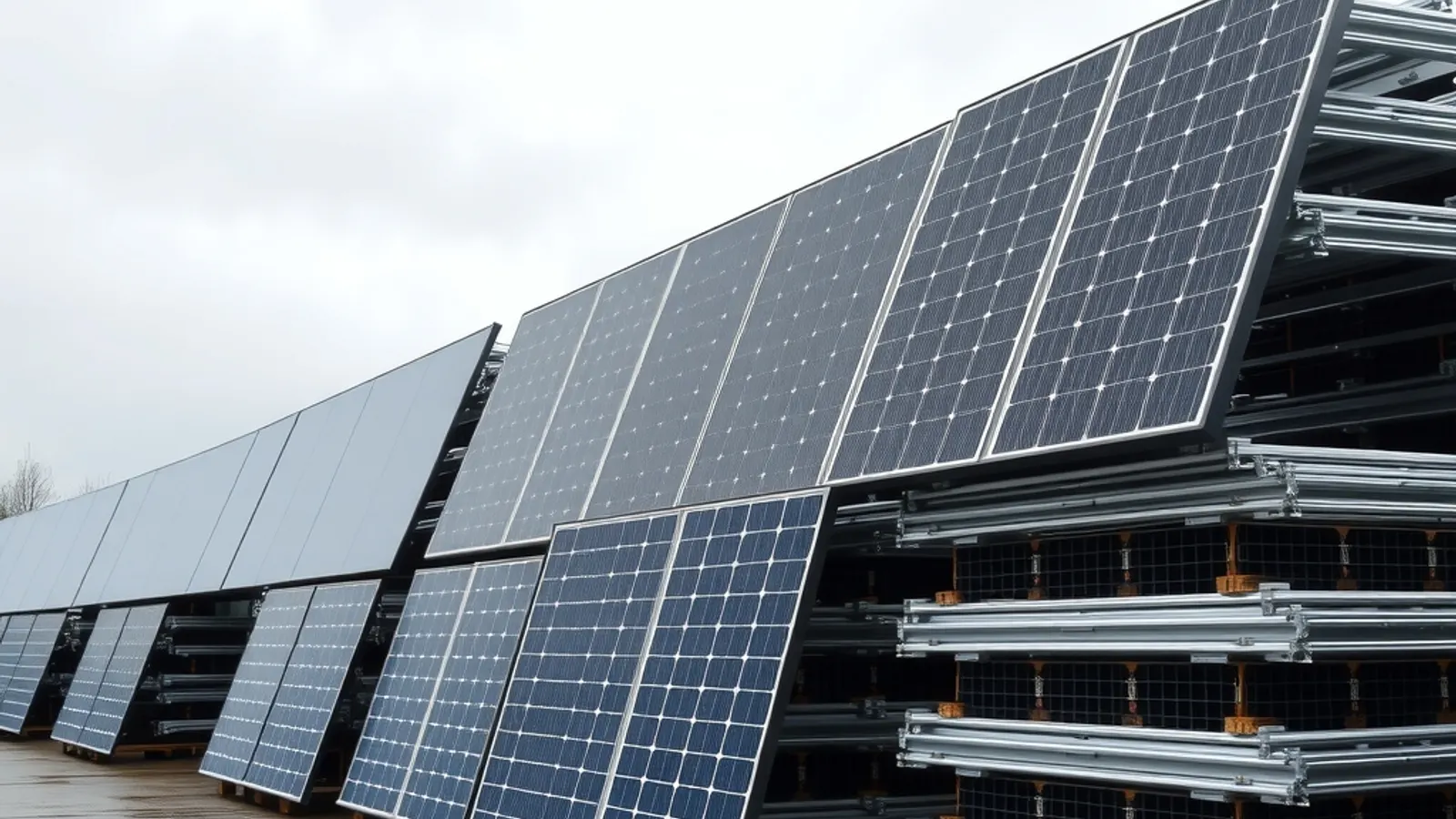
Large roofs spread fixed costs well, and heavy daytime machinery or refrigeration means most of the output can be used on site. That is the profile where solar earns fastest. It also means the roof matters. Light sheeting and ageing purlins carry less than a modern roof, and a structural survey sets the real size of the array. Sometimes the best answer is to re-roof and fit panels in one job.
The tax plan needs more thought here. At our planning range, a 500kWp system takes 30% to 43% of the yearly allowance, and a re-roof, new plant or fit-out can use up the rest. Whatever falls above it earns a 50% first-year allowance for a company, with the balance written down at 6% a year. Full expensing is closed to solar panels.
A site that buys this much power pays a lower price per unit. DESNZ's 2025 data shows 27.7p per kWh for users of 500 to 1,999 MWh a year, against 28.4p for users of 20 to 499 MWh. So the saving from each unit of solar is a little lower than at a smaller building, and a high self-use share matters more.
At 500 kWp a generator is still Type A under G99, below the 1 MW line. The connection study is lighter than for a megawatt scheme. A site already near its supply limit can still hit a cap, so check the operator's capacity data.
Business rates should not rise. In England, kit used for on-site renewable power is exempt from rating from 1 April 2022 to 31 March 2035.
Worked example: 500 kWp on a Doncaster cold store
The sums below follow one cold store with refrigeration running all week. Treat them as a method, not a forecast, because your load will differ.
- Yearly output
- About 487,500 kWh (PVGIS, Doncaster: 975 kWh per kWp)
- Cost
- £300,000 to £425,000 as a planning range
- Cautious
- 60% used at 19.4p a kWh brings in about £56,700 a year
- Favourable
- 85% used at 24.9p a kWh brings in about £103,200 a year
- Time to pay back
- About 3 years at best and 8 years at worst
Prices are 70% and 90% of the DESNZ 2025 figure of 27.7p for users of 500 to 1,999 MWh. A cold store runs refrigeration through nights and weekends, when panels make nothing, so the cautious case is the safer planning figure. Excluded: upkeep, inverter renewal, ageing, export income, finance and tax.
Sources & further reading
- DESNZ — Solar PV cost data (small-scale, 2025/26)
- DESNZ and Arup — Onshore wind and solar PV generation cost assumptions (July 2025)
- GOV.UK — Annual Investment Allowance
- GOV.UK — Full expensing and 50% first-year allowance
- DESNZ 2025 electricity prices, users of 500 to 1,999 MWh (table 3.4.1)
- legislation.gov.uk — Valuation for Rating (Plant and Machinery) (England) Regulations 2022
- PVGIS yield model, Doncaster
Frequently asked questions
Do solar panels qualify for 100% full expensing?
No, because solar panels are special-rate assets, which are outside full expensing. They qualify for the Annual Investment Allowance. Above it, a company can claim a 50% first-year allowance.
Our roof is large but old. Is 500kWp realistic?
Possibly, although roof age and sheet type set the limit, not the floor area. A structural survey comes first, and the answer is sometimes a new roof with panels, or a smaller array.
Insights on cost and returns
Sizing a 500kW array?
Share the roof type, its age and your capital plan for the year. We will say how the allowance and the survey fit together.