Midlands
The East Midlands is arable, with large holdings, and the West Midlands has England's smallest farms and 30% of its orchards. NGED serves both and reports more than 900 connection offers accepted in the east.
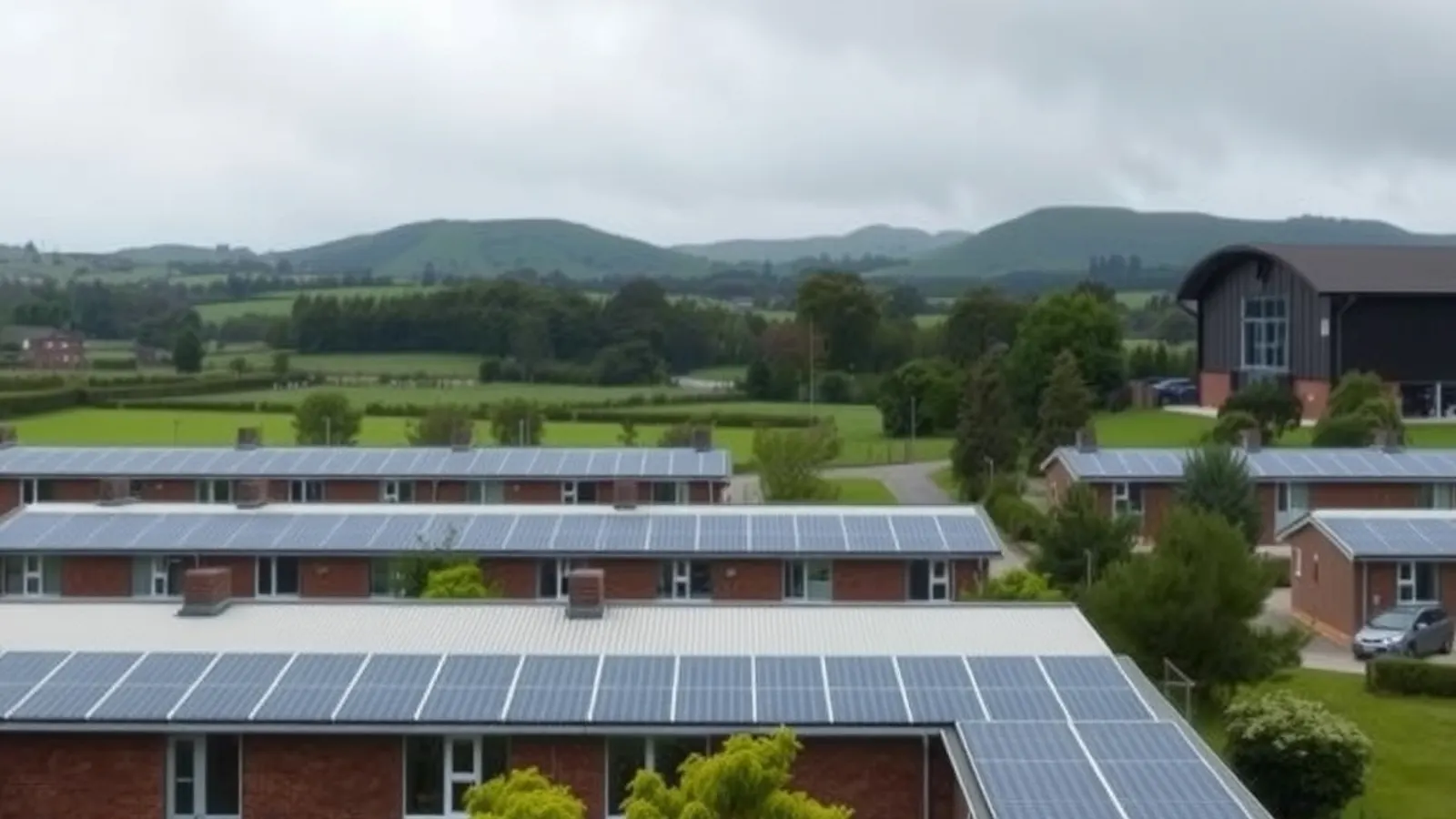
Figures for Midlands
- East Midlands farms
- 102 hectares on average; 71% arable (Defra, 2024)
- West Midlands farms
- 66 hectares on average, the smallest in England; 55% arable
- Orchards
- 5,300 ha in the West Midlands, 30% of England's
- Accepted connection offers
- Over 900 projects, 15.3 GW, in NGED's East Midlands area
- Yield per kWp
- 1,020 kWh in Northampton, 1,002 in Hereford, 968 in Birmingham (PVGIS)
Defra's 2024 survey shows how different the two halves are. East Midlands farms average 102 hectares, with 71% of the land arable and cereals taking 49% of the farmed area. West Midlands farms average 66 hectares, the smallest of any English region, with 44% of holdings in grazing livestock and 5,300 hectares of orchards, 30% of England's.
Yield is strong in the south of the region and a little lower in the north and west. PVGIS models about 1,020 kWh a year per kilowatt-peak in Northampton, 1,002 in Hereford, 968 in Birmingham and 954 in Wolverhampton.
The network is busy in the east. NGED's East Midlands report of May 2024 says the rural eastern half of its area has taken large solar and wind projects in recent years. Over 900 generation and storage projects, 15.3 GW in all, hold accepted connection offers. Most existing local generation sits in the built-up west, including gas plant near Nottingham and Leicester. A farm in the east is likely joining a long queue, and queue order matters.
The same report notes manufacturing and distribution along the M1 and M40 corridors. Large roofs and steady loads make strong rooftop cases. A rooftop array is also far smaller than a field-scale scheme.
For small West Midlands holdings, however, roofs and small ground arrays are the usual starting point. A fruit or vegetable packhouse with refrigeration is a strong self-supply case.
Land and farming
The East Midlands is mainly arable, with 71% of the farmed area and 102 hectares per farm. The West Midlands holds England's smallest farms at 66 hectares, 35% permanent pasture and 30% of England's orchards.
Network and grid
NGED serves both the East and West Midlands. In the East Midlands it reports over 900 projects, 15.3 GW, with accepted connection offers, most of the large solar and wind in the rural east. Check its network capacity map for the substation near your site.
Counties covered
Related sector pages
Sources & further reading
Frequently asked questions
Is the East Midlands grid full?
Because NGED reports over 900 projects with accepted offers, queue position matters. We ask NGED what capacity and dates apply to your substation before a lease is signed.
Do the logistics warehouses on the M1 face the same limits?
A rooftop array on a large shed needs a much smaller connection than a field-scale scheme, but the substation still sets the answer. We check it case by case.
Insights for Midlands
Farming or operating in the Midlands?
Tell us whether the site is a farm or a plant and where the nearest substation is. We will plan the first check.