250kW Commercial Solar
A 250kWp array makes around 255 MWh a year in the Midlands. Whether it pays back in three years or eight depends on how much of that the site uses, and on what the grid operator says about the connection.
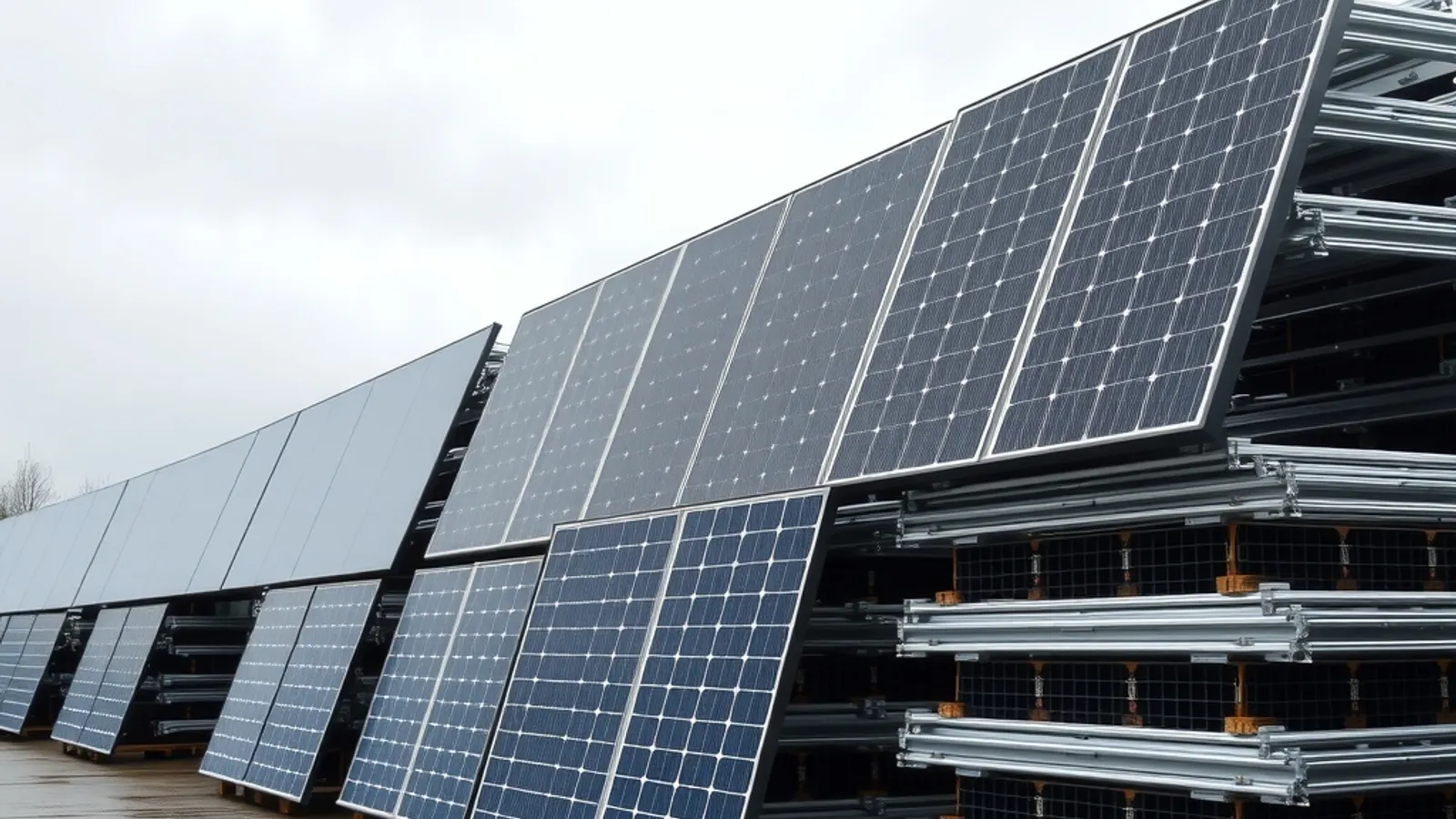
At this size the price per kWp is lower than for a small array because scaffold, cabling, commissioning and project management are spread over more panels. DESNZ's cost data stops at 50 kW, so the planning range of £650 to £950 per kWp is an interpolation, set between its £1,204 per kW median for 10 to 50 kW installs and its assumptions for large-scale solar of £526 to £788 per kWp. Quotes will vary, so collect several.
The grid is where a 250kWp project stops being routine. A generator of this size connects under G99, which means a formal application to the local network operator. If the local network has little spare capacity, the operator may offer a reduced export limit or call for reinforcement, and the cost of that falls on the project. It is cheaper to learn that at feasibility stage than after kit has been ordered.
Exports earn something, but not much. The Smart Export Guarantee applies to solar up to 5 MW, and Ofgem requires every tariff to be above zero. Each supplier sets its own rate. So plan the array to use as much as possible on site. A unit used there saves a delivered price, while an exported unit earns only the SEG rate.
Many buildings at this scale are let. Where a landlord owns the roof and tenants pay for power, the cost and the saving land on different parties, and an on-site PPA or a lease clause may be needed to line them up.
The cost fits inside the £1 million Annual Investment Allowance for most companies, but the allowance is a yearly pool. Other plant bought in the same accounting period draws on it too. Solar panels cannot use full expensing.
Worked example: 250 kWp on a Northampton distribution unit
These numbers show how the sums run for a typical distribution unit. Still, your quote and your meter data will move them.
- Yearly output
- About 255,000 kWh (PVGIS, Northampton: 1,020 kWh per kWp)
- Cost
- £162,500 to £237,500 as a planning range
- Lower use
- 60% used at 19.9p a kWh gives roughly £30,400 a year
- Higher use
- 85% used at 25.6p a kWh gives roughly £55,400 a year
- Years to recover the cost
- Roughly 3 (lowest cost, higher use) up to 8 (highest cost, lower use)
Power prices here are 70% and 90% of the DESNZ 2025 average, 28.4p for a business that uses 20 to 499 MWh. A 255 MWh array needs a site that uses well over that in daytime hours to reach the higher case. Not counted: servicing, inverter renewal, panel ageing, export income, financing and tax.
Sources & further reading
- DESNZ — Solar PV cost data (small-scale, 2025/26)
- DESNZ and Arup — Onshore wind and solar PV generation cost assumptions (July 2025)
- Energy Networks Association — G98 and G99 connection guides and forms
- Ofgem — Smart Export Guarantee
- DESNZ 2025 electricity prices, users of 20 to 499 MWh (table 3.4.1)
- PVGIS yield model, Northampton
Frequently asked questions
Do we need the network operator's approval for 250kW?
Yes. A system of this size connects under G99, which needs a formal application. The operator may study the local network and set an export limit or ask for reinforcement.
We let part of the building. Does that matter?
It changes who gains, not whether solar works. For example, a lease clause or an on-site PPA can line up the cost and the saving. See our page for commercial and office buildings.
Insights on cost and returns
Looking at a 250kW roof?
Tell us the building, its yearly electricity use and whether you own the roof. We will say what the grid check should cover.