Worked example: a council-run secondary school
A sample secondary school on a council estate. It is closed for much of the summer, when solar output peaks. We test two system sizes to show why bigger is not always better.
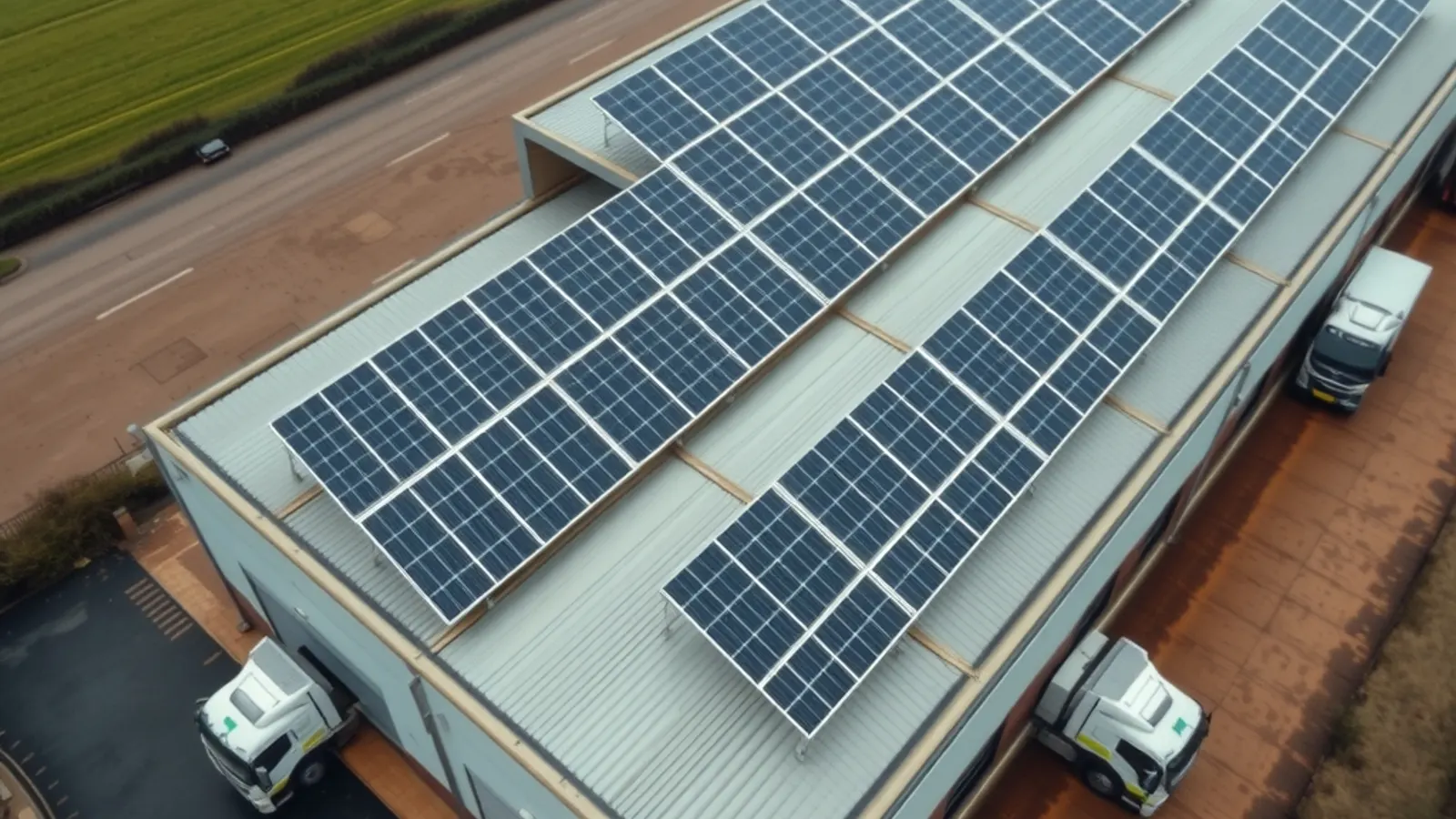
Worked example, not a client: this sample site and every figure on this page are made up to show the method. The inputs are listed below as assumptions. Swap in your own and the answer will change.
This is a worked example, not a client. The school, the council and the figures are made up to show the method, while the summer problem is real for most schools.
Picture a secondary school with a large, sound roof. The council has a net zero target, yet its capital budgets are tight. Any purchase must follow public procurement rules.
The catch is the calendar. Solar makes the most power from May to August. Yet a school is shut for much of that time. So a large share of a big array's output would be exported for a few pence, not used.
That changes the sizing, because unused power earns so little. The sums below compare a 120 kWp array that fills the roof with an 80 kWp array sized to term-time demand.
Tax relief works differently here too. Capital allowances reduce a company's tax bill. However, a council does not pay corporation tax, so they add nothing to these sums.
Buying has its own rules. Public bodies in England, Wales and Northern Ireland buy under the Procurement Act 2023. A fair, scored tender or a suitable framework keeps the choice defensible, since the spend is public money.
The assumptions
| Yearly yield | 900 kWh per kWp (assumption; check in PVGIS) |
|---|---|
| Share used on site, 120 kWp | 60% (assumed, because of the summer closure) |
| Share used on site, 80 kWp | 80% (assumed) |
| Price the school pays for grid power | 22p per kWh (assumption) |
| Export rate | 5p per kWh (assumption) |
| Installed cost | £950 per kWp at 120 kWp, £1,000 per kWp at 80 kWp (assumptions) |
The sums
- 120 kWp: output 108,000 kWh. Used on site 64,800 kWh × 22p = £14,256. Exported 43,200 kWh × 5p = £2,160. Total £16,416 a year.
- 120 kWp cost: £114,000. Simple payback: about 6.9 years.
- 80 kWp: output 72,000 kWh. Used on site 57,600 kWh × 22p = £12,672. Exported 14,400 kWh × 5p = £720. Total £13,392 a year.
- 80 kWp cost: £80,000. Simple payback: about 6.0 years.
- So the smaller array pays back about a year sooner, for £34,000 less capital. The larger one saves more carbon in total, which may still matter for the council's target.
- Not counted: battery storage, summer lets of the site, panel ageing, upkeep and price changes.
Rules and tools used
Frequently asked questions
Is this a real client result?
No. It is a worked example with made-up inputs. It shows how holiday closures affect sizing. It does not describe any real school or council.
Would a battery fix the summer problem?
Only in part. A battery moves power from day to evening, not from August to October. It can help on term-time days, but it adds cost, so it needs its own sums.
Want these sums run on your own site?
Your roof, your bills and your grid will differ from this example. A feasibility study swaps our assumptions for your real figures before you commit.