Worked example: a multi-let office and retail park
A sample park with three flat roofs, one landlord and several tenants. The landlord would pay for the panels, but the tenants use the power. We show one way to split the value, with every input stated.
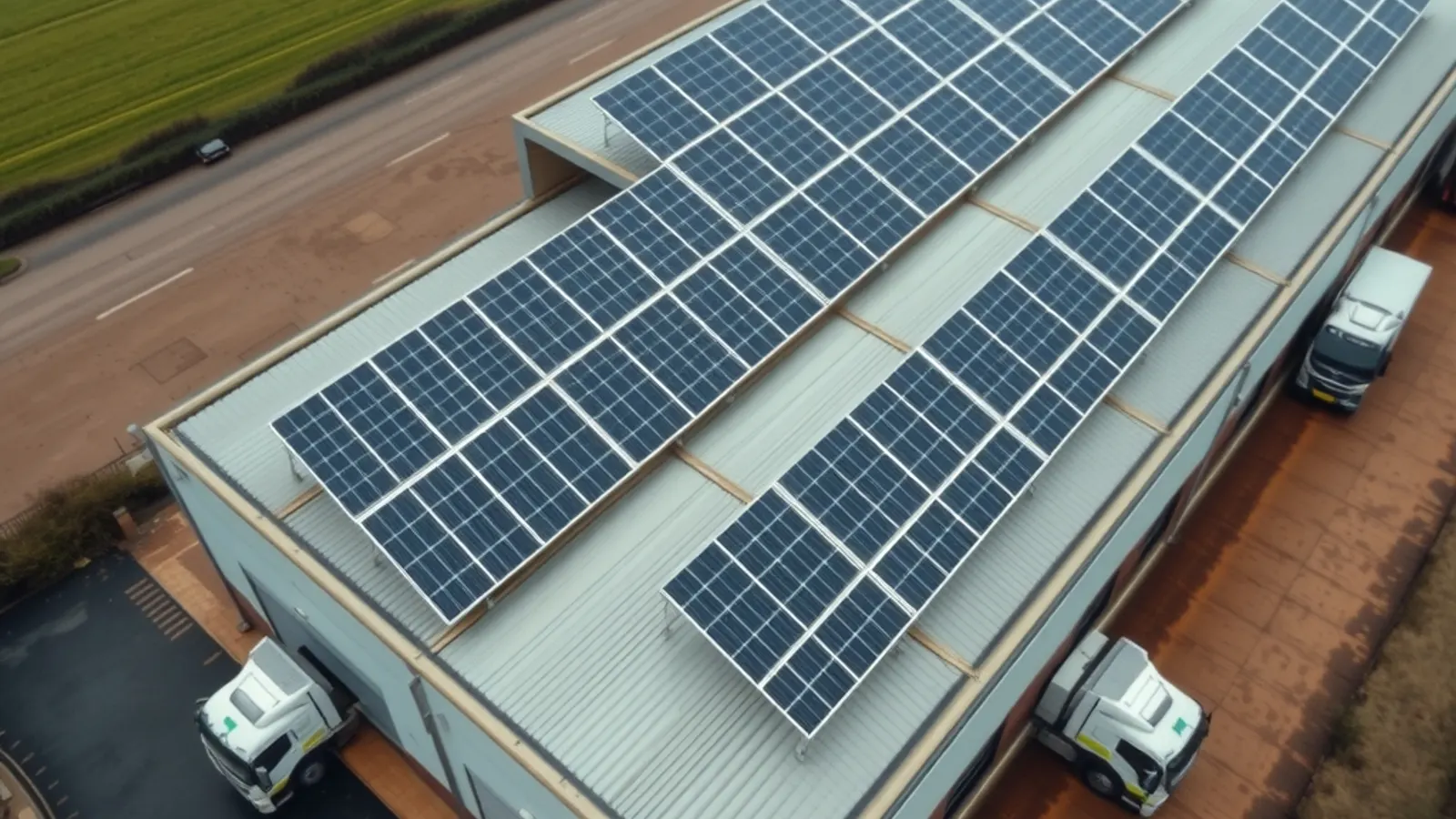
Worked example, not a client: this sample site and every figure on this page are made up to show the method. The inputs are listed below as assumptions. Swap in your own and the answer will change.
This is a worked example, not a client. The park, the leases and the prices are made up to show the method, while the problem itself is very common.
Picture three flat-roofed buildings on one park in the South East. Offices and shops rent them on full repairing leases with a shared service charge. The landlord owns the roofs, while the tenants pay the power bills.
That is the classic split. The person who would pay for solar is not the person whose bills would fall. Unless the deal shares the value, nobody has a reason to go first, since neither side gains alone.
There are three common ways round it. The landlord can recover the cost through the service charge, if the leases allow it. The landlord can own the panels and sell the power to tenants. Or a funder can own them under a PPA and sell the power instead, for example on a 20-year term.
The sums below test the second route. However, selling power to tenants raises lease and supply-licence questions, so a lawyer must check the structure first.
There is a second reason landlords look at this. Since 1 April 2023, a non-domestic property in England or Wales generally needs at least an EPC E rating to be let, unless an exemption is registered. Solar can help an EPC score, although it is rarely the only fix needed.
The assumptions
| Array size | 180 kWp over three roofs (assumed) |
|---|---|
| Yearly yield | 900 kWh per kWp (assumption; check in PVGIS) |
| Share used by tenants | 85% (assumed for weekday office and shop hours) |
| Tenants' grid price | 26p per kWh (assumption) |
| Price landlord charges tenants | 18p per kWh (assumption) |
| Export rate | 5p per kWh (assumption) |
| Installed cost | £900 per kWp, so £162,000 (assumption; small split roofs cost more per kWp) |
The sums
- Yearly output: 180 kWp × 900 kWh = 162,000 kWh.
- Sold to tenants: 85% = 137,700 kWh. At 18p, the landlord earns £24,786.
- Tenants save 8p on each of those units (26p less 18p): £11,016 a year between them.
- Exported: 24,300 kWh × 5p = £1,215 to the landlord.
- Landlord's yearly income: £26,001. Simple payback before tax: £162,000 ÷ £26,001 = about 6.2 years.
- Stress test: if a large tenant leaves and use falls to 60%, landlord income drops to £20,736 (97,200 kWh × 18p plus 64,800 kWh × 5p). Payback stretches to about 7.8 years.
- Not counted: legal costs, metering for each tenant, panel ageing, upkeep and any change in power prices.
Rules and tools used
Frequently asked questions
Is this a real client result?
No. It is a worked example with made-up inputs. It shows how the value of solar can be split on a multi-let site. It does not describe any real park.
What if our leases don't allow cost recovery through the service charge?
That is common. Then a landlord-owned supply deal or a third-party PPA is usually the route to test. Either way, the lease terms decide what is possible, so they come first.
Want these sums run on your own site?
Your roof, your bills and your grid will differ from this example. A feasibility study swaps our assumptions for your real figures before you commit.